If you’ve ever worked in manufacturing, construction, or logistics, you’ve likely relied on cogged V-belts to keep heavy machinery running smoothly. For 12 years, I’ve been a supplier of these components, and one question comes up more often than any other: Are cogged V-belts recyclable? It’s a fair question—sustainability isn’t just a trend for our industry; it’s a responsibility. Too many businesses throw away worn belts without a second thought, adding unnecessary waste to landfills, and honestly, it frustrates me. Today, I want to break down the facts, clear up some misconceptions, and explain what we as a belt supplier can do to help. Cogged V Belt
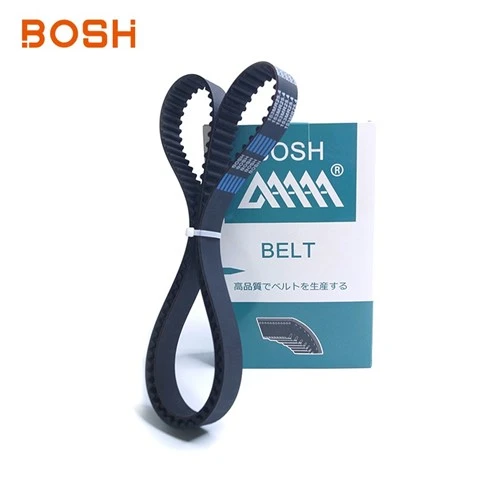
First, let’s start with what makes a cogged V-belt different from a standard V-belt. Unlike flat belts, which are thin and flexible, cogged V-belts have notches (or cogs) cut into their inner surface. Those cogs let the belt bend tightly around pulleys without slipping, which is why they’re perfect for high-torque, low-speed applications like conveyor systems, agricultural equipment, and industrial blowers. The core material of a typical cogged V-belt is a mix of rubber (usually synthetic, like neoprene or ethylene propylene diene monomer, EPDM), reinforcement cords (usually polyester or aramid for strength), and sometimes a fabric cover to protect the rubber. That mixed-material design is what makes recycling tricky, but not impossible.
For a long time, the common answer to “are cogged V-belts recyclable?” was no. Most municipal recycling programs don’t accept them. Why? Because rubber and synthetic polymers don’t break down easily, and the reinforcement cords are often impossible to separate from the rubber matrix with standard recycling equipment. If a belt ends up in a general recycling bin, it can jam sorting machines, contaminate other recyclables like paper or metal, and make the whole batch unusable. That’s why many facilities still send worn belts to landfills, where they can take decades or even centuries to decompose.
But here’s the good news: recycling technology for rubber products has come a long way in the last decade. I’ve watched a lot of suppliers, us included, shift from “take and throw” to “take and repurpose” programs. Let me walk you through what’s possible now. The first step is mechanical recycling, which is the most widely available method. Worn belts are ground into small crumb rubber, then sorted to remove any metal or fabric fragments. That crumb can be used to make new rubber products—like playground surfaces, road asphalt modifiers, or even new, lower-performance belts. But it’s not perfect: the crumb loses some of its strength, so it can’t be used for high-stakes applications like heavy-duty conveyor belts. It’s still a huge step up from landfilling, though.
Then there’s chemical recycling, a more advanced method that’s still growing in popularity. This process uses heat, chemicals, or microbes to break down the rubber polymer into its basic chemical building blocks. Those blocks can be turned back into new synthetic rubber, which can then be used to make brand-new cogged V-belts or other industrial components. I’ve seen a few recycling facilities partner with industrial manufacturers to create closed-loop systems—our company even works with one that takes our worn belts, processes them into recycled rubber, and sends it back for us to use in lower-tier belt products. That cuts down on the need for virgin rubber, which is a big win for the environment.
But let’s be honest: for many small to medium-sized businesses, even these methods feel out of reach. They don’t have the resources to send a pallet of worn belts to a specialized recycling facility, and they don’t have time to sort through each belt to remove metal or fabric. That’s where our role as a supplier comes in. A few years ago, we launched our own take-back program specifically for cogged V-belts. Here’s how it works: if you’re a customer, you can send us your worn, unusable belts at no cost. We sort them, send them to our pre-approved recycling partners, and pass along any credits we get from the recycler to your next order. It’s not just a “throw it in a bin” thing—it’s a turnkey solution that takes the guesswork out of recycling.
I also want to address a common myth: that all cogged V-belts are the same, so recycling one is the same as recycling another. That’s not true. Belts made from EPDM, for example, are easier to recycle than those made from harder neoprene, because EPDM breaks down more cleanly in chemical processes. Aramid-reinforced belts (which are lighter and stronger for high-performance uses) can be more challenging because the aramid fibers don’t break down as easily, but recent advancements in fiber-sorting technology have made it possible to remove them from rubber in most mechanical recycling lines. That’s why at our company, we always advise customers to share exactly what type of belt they’re using when they reach out—so we can direct it to the right recycling stream, not the wrong one.
Another thing to consider: even if a belt is worn out, it might not be useless. We get a lot of requests from customers who ask about repairing cogged V-belts instead of replacing them. It’s true—small cuts, minor cracking on the outer cover, or even misaligned cogs can sometimes be fixed with specialized rubber adhesives or cog resurfacing services. Last year, one of our agricultural customers told us they’d saved over $12,000 a year by repairing instead of replacing their conveyor belts. That’s not just good for their bottom line—it reduces waste too, because you don’t have to process a whole new belt.
But what about belts that are beyond repair? For those, recycling is still better than landfilling, but we have to be realistic about the limits. A few customers have asked if we can reuse old belts for new applications, and that’s rare, but not impossible. Last year, we worked with a construction company to repurpose worn cogged V-belts into heavy-duty drag mats for clearing construction sites. The strong polyester cords made them perfect for that use, so instead of grinding them up, we cut the belts to size and reinforced the edges. It’s a small example, but it shows that creativity can go a long way in extending a belt’s lifecycle.
I know some of you are thinking: “This is all well and good, but recycling costs more than just throwing the belt away.” It’s true that specialized recycling isn’t free, but the long-term costs of landfilling are higher than you think. Many municipalities charge per pound of industrial waste, so sending a pallet of belts to a landfill can cost hundreds of dollars. Our take-back program eliminates that fee, and the credits we pass along cut down on your next order. Plus, more and more companies are looking for suppliers that prioritize sustainability. We’ve had customers choose us over competitors solely because of our recycling program, and I’ve seen that trend grow every year since we launched it.
Let’s also talk about what’s not working. A lot of small businesses still don’t know that recycling cogged V-belts is an option. That’s why we’re passionate about educating our customers—blog posts like this, webinars, and even one-on-one calls with our sales team to walk them through the process. We’ve had customers tell us they were throwing away 50 to 100 belts a month before they found us, and now they’re recycling every single one. It’s a small change, but multiplied across dozens of customers, it adds up to thousands of pounds of waste kept out of landfills every year.
I want to be clear, too: there’s no one-size-fits-all answer to whether cogged V-belts are recyclable. It depends on the belt’s material, its condition, and what recycling facilities are available to you. But what I can promise you, as a supplier who’s worked with these belts for over a decade, is that it’s possible. It doesn’t have to be complicated or expensive. You don’t have to feel guilty about a worn belt anymore—there’s a better way.
At the end of the day, sustainability in industrial parts is a team sport. We as suppliers have to make it easy for our customers to recycle, and customers have to prioritize that option over just replacing and dumping. I’ve seen too many companies see belt replacement as a necessary evil, but it doesn’t have to be that way. Every belt we recycle is one less piece of rubber sitting in a landfill, and every repair we do cuts down on the need for virgin materials.

If you’re a customer who’s been wondering how to handle your worn cogged V-belts, or if you’re looking for a supplier that prioritizes recycling and sustainability, I’m here to help. We can walk you through our take-back program, answer questions about your specific belt’s recyclability, or even work with you to find ways to extend your belts’ lifespans. No question is too small—we’ve been in the industrial space long enough to know that every customer’s needs are different.
Oil Seal References:
- Rubber Manufacturers Association. (2022). "Industrial Rubber Product Recycling: A Guide for Manufacturers."
- International Organization for Standardization. (2021). "ISO 14001:2015, Environmental Management Systems – Requirements with Guidance for Use."
- U.S. Environmental Protection Agency. (2020). "Advancing Rubber Recycling Technologies for Industrial Applications."
- Belt Industry Technical Association. (2023). "Cogged V-Belt Lifecycle and End-of-Life Management Best Practices."
- European Tyre and Rubber Manufacturers’ Association. (2022). "Closed-Loop Recycling for Synthetic Rubber Components."
Xingtai Boshuo Auto Technology Co., Ltd.
Xingtai Boshuo Auto Technology Co., Ltd. is one of the most professional cogged v belt manufacturers and suppliers in China, featured by quality products and low price. Please rest assured to wholesale bulk customized cogged v belt made in China here from our factory. Welcome to contact us for pricelist and free sample.
Address: No. 58 Quannan East Street, Xiangdu District, Xingtai City, Hebei Province
E-mail: sherry1@bs-belt.com
WebSite: https://www.bsbelts.com/
