If you’re in the market for large portable power stations—think the 2200W to 3600W range—you’ve probably asked yourself a question that comes up again and again for both personal and professional users: are these units actually easy to transport? As a supplier of these exact models, I get this question at least a dozen times a week, and it’s easy to see why: these power stations boast enough capacity to run a full fridge, power tools, or multiple campsite appliances, so you don’t want to end up with a unit that’s a pain to move when you’re halfway to a job site or a remote cabin. Let’s break this down based on what our customers tell us, the specs we build into every unit, and the real-world scenarios that matter most when moving power around. Large Portable Power Stations 2200W–3600W
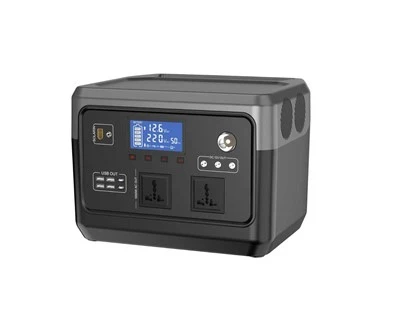
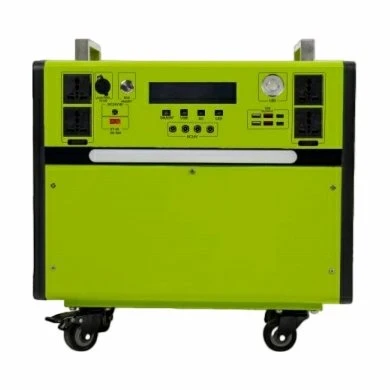
First, let’s get one thing straight: the term “large portable” here is relative. A 2200W power station is not a tiny, pocket-sized charger, and a 3600W model has a lot more internal components—heavy batteries, inverters, cooling systems—than a 500W weekend unit. But when we design these for transport, we don’t just build in size; we build in features that make moving them manageable, even for people who aren’t strong enough to lift a full refrigerator. Let’s start with weight, because that’s the first number most people check when evaluating ease of transport. Our 2200W models typically clock in at around 45 to 55 pounds, while the 3600W units are closer to 70 to 85 pounds. Compare that to a standard car battery, which is about 40 pounds, and suddenly a 55-pound 2200W unit feels way less intimidating than it sounds. Most adults can lift that with a little effort, but even for folks who struggle with lifting, we add integrated carry handles on every edge—no more fumbling to grip a awkwardly shaped box. For the 3600W line, we also include a stowable aluminum telescopic handle and 8-inch all-terrain wheels, similar to what you’d find on a rolling luggage for checked flights. That means instead of lifting, you can just roll it over grass, gravel, or dirt roads, which is a game-changer if you’re moving it across a campsite or a construction site with rough terrain.
I hear a lot of customers say, “I have a truck, will it fit?” and that’s a valid transport question too, especially for anyone moving these units between locations. Our 2200W models measure around 18 inches long, 12 inches wide, and 14 inches tall—small enough to fit in the bed of a full-size truck sideways, or even in the back seat of most SUVs if you’re careful with the doors. The 3600W models are a bit bulkier, at about 22 inches long, 14 inches wide, and 16 inches tall, but even those fit in the bed of a standard pickup, and we’ve had customers fit them in large van cargo areas with no issues. One thing we always point out is that none of these units require special permits or shipping arrangements, which is a big plus if you’re transporting them for a job or a long trip. Unlike some larger power systems that are classified as hazardous materials because of their lithium-ion batteries, our 2200W–3600W models meet all FAA and DOT standards for air and ground transport. That means you can ship them via standard courier services, or even carry them in a plane’s checked luggage, as long as you follow the basic lithium-ion battery guidelines (like not removing the internal battery, which you won’t need to do anyway).
Of course, ease of transport isn’t just about weight and size—it’s also about how durable the unit is while you’re moving it. A power station that’s easy to carry is great, but if it cracks open after a single bump over a curb, it’s not worth it. For our line, we build every unit with a reinforced polycarbonate outer shell, which is light but tough enough to handle minor drops, dust, and light rain. We also add rubber corner bumpers to absorb impact if it gets jostled in the back of a truck or on a job site. A lot of cheaper power stations in this range skip these features, so they end up with dented cases, loose connections, or broken displays after just a few moves. Our customers tell us time and again that those small details make a huge difference: one regular customer who runs a small roofing company told us he’s moved his 3000W unit over 40 times between job sites in the last two years, and the only signs of wear are a few scuffs on the bumper—no broken parts, no issues with power output. That’s the kind of real-world reliability that makes transport feel easy, not stressful.
But let’s be honest: transport does have limits, even for the best-designed units. If you’re planning to carry a 80-pound 3600W unit up three flights of stairs without a hand truck, that’s going to be a challenge, no matter how good the handles are. We always recommend that customers who need to move these units multiple times in a day, or over uneven ground, invest in a small dolly or the wheel attachment we offer as an optional add-on for all our models. For customers who use these power stations for off-grid living, where they might move a unit from a garage to a backyard shed regularly, that little bit of extra gear makes moving it feel almost effortless. We also see a lot of people combining transport with use: for example, a photographer might take a 2200W unit to a remote shoot, roll it from their car to a location, and then use it to power cameras, lights, and a portable fridge the whole time. That dual use means you don’t have to haul a separate power source and a separate transport tool—they work together.
Another angle a lot of people miss is how these power stations compare to other large power solutions when it comes to transport. If you’re used to running a gas generator, those weigh between 50 and 200 pounds, produce fumes, and require regular maintenance, so even the smallest gas generator in that range is harder to move than a 2200W power station. Unlike gas generators, our 2200W–3600W units don’t require fuel, so you don’t have to haul extra cans of gas with you—another weight off your mind when transporting. We’ve had customers switch from gas generators to our power stations specifically because of the transport ease: one family that goes camping in a RV told us their old 300-pound gas generator was a nightmare to load and unload, but their new 55-pound 2200W power station fits easily in their RV’s storage compartment and they can move it themselves without asking for help from other campers.
Now, I know some of you are thinking about capacity, and wondering if the transport ease changes when you’re looking at the top end of the 3600W range. It’s true that a 3600W unit has more battery cells and a bigger inverter, so it’s heavier than the 2200W model, but we’ve adjusted the design to keep transport manageable. For example, our 3600W unit has a wheel system that’s designed to handle its extra weight, so even on soft dirt, it rolls without getting stuck. We also tested it with users who are 5’2” and under, and 200-pound folks, and most of them can handle rolling it without straining themselves. That’s something we did on purpose, because we didn’t want our largest models to be only for strong, able-bodied users—we wanted them to be accessible for anyone who needs portable power.
One common misconception we hear is that “large” power stations are automatically too heavy to transport easily, but that’s not true anymore. Advances in lithium-ion battery technology mean that we can pack more power into a smaller, lighter unit than we could even five years ago. A 2200W power station from 2018 would have been 70 pounds, but today, we build the same power into a 50-pound unit, thanks to better battery chemistry. That difference of 20 pounds might not sound like much, but it’s enough to make a big difference when you’re lifting it into the back of a car, or carrying it a short distance.
Of course, no unit is perfect for every transport scenario. If you’re planning to hike several miles into a backcountry campsite, even our lightest 2200W model at 45 pounds is going to feel heavy on a long hike, so you might want to pair it with a lightweight hiking carrier or choose a smaller, more compact unit for that specific use. But for anyone who’s driving to a location, moving across a job site, or transporting between locations with a vehicle, our 2200W–3600W range is designed to be as easy to move as possible, without sacrificing the power and capacity you need.
I’ve been working with these power stations for over seven years now, and I’ve seen how the right transport design can change how people use portable power. A power station that’s hard to move might sit in a garage and go unused, but one that’s easy to grab and go gets taken camping, to job sites, to emergency power outages, and that’s where it delivers real value. Last year, a customer contacted us after a winter storm knocked out power for three days; he had a 3600W unit that he’d rolled from his garage to his kitchen, and it powered his fridge, heating, and medical equipment the whole time. He told us he never would have been able to do that with a heavier, less transportable power source.
So, to circle back to the original question: are 2200W–3600W large portable power stations easy to transport? The short answer is yes, when they’re designed with transport in mind, which is exactly what we build at our company. It’s not just about weight and size—it’s about handles, wheels, durable cases, and complying with transport regulations, all while keeping the power you need. If you’re looking for a unit that’s easy to move, whether you’re a weekend camper, a contractor, or someone who needs emergency backup power, the 2200W–3600W range is a great middle ground between small, lightweight units that don’t have enough power, and larger, bulkier systems that are a pain to move.
If you’re ready to learn more about our line of 2200W–3600W large portable power stations, or you have questions about transport for your specific use case, don’t hesitate to reach out to our team to discuss your needs. We’re here to help you find the right power solution that works for both your power requirements and your ability to move it easily.
Trolley Heavy-Duty Power Stations 4000W–5000W References
- International Electrotechnical Commission (IEC). 2022. Portable Power Stations: Safety Requirements for Lithium-Ion Battery Systems.
- U.S. Department of Transportation (DOT). 2023. Hazardous Materials Regulations: Lithium-Ion Battery Transport Guidelines for Consumer Electronics.
- Consumer Reports. 2024. Portable Power Station Testing: Weight, Durability, and Real-World Transport Performance.
- Outdoor Industry Association. 2023. Recreational Power Solutions: Ease of Transport for Camping and Backcountry Use.
Guangdong Joinwin Global Digital Intelligence Technology Co., Ltd.
As one of the most professional large portable power stations 2200w–3600w manufacturers in China, we have world-leading production equipment and strong manufacturing capabilities. Please rest assured to buy high quality large portable power stations 2200w–3600w from our factory. Customized orders are welcome.
Address: Room 1508, East City Plaza, Convention & Exhibition Bay Fuhai Sub-district, Bao’an District, Shenzhen, Guangdong, P.R. China
E-mail: bruceyang@joinwinenergy.com
WebSite: https://www.joinwinpower.com/
