If you’ve ever worked with high-performance cables—whether for aerospace electronics, medical devices, or deep-sea telecommunications—you might not stop to think about the tiny, durable metal parts holding those cables together. As a tantalum metal supplier, I talk to cable engineers and production teams all the time who assume copper, aluminum, or even stainless steel are the only metals worth relying on for cable components. But over the 12 years I’ve been in this business, I’ve watched tantalum transform entire cable design challenges, turning flimsy, short-lived cable assemblies into systems that perform flawlessly in environments where failure isn’t an option. Today, I want to break down exactly how tantalum is used in the cable industry, why it’s become a go-to material for critical applications, and why more teams are reaching out to us for custom tantalum parts for their cable projects. Tantalum Metal
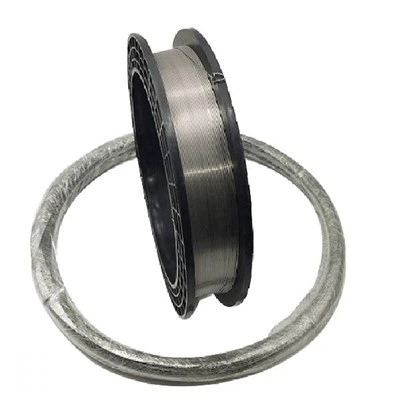
Let’s start with the basics: most people know tantalum is a rare, transition metal with extremely high melting point (around 2,996°C) and exceptional corrosion resistance. What’s less widely discussed is how these properties translate directly to solving specific pain points in cable design. Cables aren’t just long wires—they’re complex systems of cores, shielding, connectors, and termination points, each of which has to withstand unique stressors. Tantalum works in every part of that system, from the innermost signal-carrying core to the outermost protective layer, and even the tiny components that hold it all together.
One of the most common uses of tantalum in cables is in high-frequency signal transmission components, specifically for shielding and core sheathing. For applications like 5G infrastructure, satellite communication, or high-speed data centers, cables have to carry signals at gigahertz frequencies without interference or signal loss. Copper, the traditional material for signal cores, is conductive, but it’s prone to parasitic losses at high frequencies, and it doesn’t hold up well when exposed to harsh chemicals or extreme temperatures common in industrial environments. That’s where tantalum comes in. Tantalum has a low dielectric constant and low loss tangent, meaning it doesn’t absorb or distort high-frequency signals. That makes it ideal for thin, lightweight shielding foils that line cable jackets for high-frequency data cables. Unlike aluminum shielding, which can corrode when exposed to moisture or industrial fumes, tantalum forms a self-passivating oxide layer that seals out water and chemicals, so the shielding doesn’t degrade over time. We supply custom-thickness tantalum foils for several 5G cable manufacturers, and they’ve reported up to 30% less signal attenuation over 10 years of outdoor use compared to standard aluminum-shielded cables.
Next, tantalum is a game-changer for cable termination components—think the pins, sockets, and contact rings used to connect cable cores to connectors. In aerospace and defense applications, cable terminations have to withstand extreme vibration, temperature swings (from -55°C to 175°C), and exposure to jet fuel, hydraulic fluids, and saltwater. Stainless steel contact pins can wear down quickly when mated and unmated repeatedly, leading to loose connections that cause signal drops or even equipment failure. Gold-plated pins are durable, but gold is soft, and it’s prone to scratching, especially in tight spaces. Tantalum contact pins, on the other hand, have a hardness of 6.5 on the Mohs scale—hard enough to resist scratching and wear, but malleable enough to form a tight, reliable connection when crimped. They also match the thermal expansion coefficient of copper cable cores almost exactly, so when a cable is exposed to extreme temperature changes, the pin and core expand and contract at the same rate, eliminating the risk of loose or broken connections. Last year, we worked with a defense contractor that was experiencing a 5% failure rate on cable terminations for their fighter jet avionics systems. They switched from gold-plated steel to our precision-machined tantalum pins, and that failure rate dropped to less than 0.1%. That kind of reliability is non-negotiable when a $10 million aircraft’s navigation system depends on a cable connection.
Another underdiscussed use of tantalum in cables is in cryogenic cable assemblies for medical and research applications. MRI machines, particle accelerators, and space telescopes use cables that operate at temperatures as low as 4 K (-269°C) during use. At these extreme temperatures, most metals become brittle—aluminum, copper, even steel can crack or snap when exposed to deep cold, which would render expensive medical equipment or research tools useless. Tantalum, though, remains ductile and strong at cryogenic temperatures, retaining its tensile strength and flexibility even when bent or twisted. We supply tantalum core wires for the cryogenic cables used in open-bore MRI machines, where the cable has to move freely as patients are scanned without breaking. Before our clients started using tantalum, their cryogenic cables had to be replaced every 18 months due to cracking at cold temperatures; now, those same cables have a 10-year lifespan. That’s a huge cost savings for hospitals, which can now avoid the expense of emergency cable replacements and downtime for patient scans.
One of the most innovative uses of tantalum in cables I’ve seen in recent years is in radiation-shielding cables for medical and nuclear applications. In radiation oncology, radiology, and nuclear power plants, cables have to be routed through areas with high levels of ionizing radiation, which can damage standard copper cables and cause signal errors. Shielding these cables with lead is the traditional solution, but lead is toxic, heavy, and difficult to work with, especially for portable medical equipment. Tantalum is a radiation absorber that’s 40% more effective at blocking gamma and X-rays than lead by weight, and it’s non-toxic, lightweight, and easy to machine. We developed custom tantalum-braided shielding for portable X-ray machine cables a few years ago, and the manufacturer was able to cut the weight of their cable assemblies by 25% while improving radiation protection by 15% compared to lead-shielded cables. That makes their portable X-ray machines easier for technicians to transport and position, without compromising safety.
Of course, tantalum isn’t perfect for every cable application. It’s more expensive than copper or aluminum, so it’s not used for low-cost, single-use cables like those in consumer electronics. And it’s not as conductive as copper, so it’s never used as the primary signal core for low-frequency, high-power cables—for those, copper is still the best choice. But for high-stakes, long-lifespan cables where reliability, durability, and performance under extreme conditions matter most, tantalum is often the only material that checks all the boxes.
As a tantalum metal supplier, I’ve seen first-hand how a lot of cable engineers don’t realize tantalum’s potential until they’ve exhausted all other options. A few months ago, a customer reached out to us because their existing submarine telecom cables were failing after just 5 years at 2,000 meters deep. The cables were exposed to high pressure, saltwater, and deep-sea microbes, which corroded the copper shielding and caused signal losses. They’d tried coating the shielding with nickel, using stainless steel cladding, even adding extra layers of polymer jacket—but nothing lasted. We supplied them with a thin tantalum foil lining for their cable shielding, and the new cables have now been in use for 3 years without a single reported failure. Tantalum’s corrosion resistance is legendary—at the bottom of the ocean, it doesn’t react with saltwater, doesn’t support microbial growth, and doesn’t degrade under high pressure. That’s exactly what that customer needed.

If you’re a cable designer, production manager, or engineer working on a project that requires high performance, long lifespan, and reliability in harsh conditions, tantalum might be the solution you’ve been looking for. We work with teams on custom tantalum parts, from foils and braids to precision-machined pins and contact rings, tailored to your specific cable specifications. We source our tantalum from ethical, conflict-free mines, and we offer full testing and certification to meet industry standards for aerospace, medical, defense, and telecom applications. If you’re tired of cable failures, overpaying for short-lived components, or dealing with materials that can’t keep up with extreme environments, reach out to our team to discuss your project. We’d be happy to walk you through our tantalum solutions and help you find the right material for your cable needs.
Tungsten Alloy References
- "Tantalum Properties and Applications." Tantalum-Niobium International Study Center.
- "High-Frequency Cable Shielding Materials: Performance Comparison." IEEE Transactions on Electromagnetic Compatibility.
- "Cryogenic Mechanical Properties of Refractory Metals." Journal of Materials Science.
- "Radiation Shielding with Tantalum: Advantages Over Lead for Medical Applications." Medical Physics.
- "Corrosion Resistance of Tantalum in Marine Environments." Corrosion Science.
Address: Wangjing Science and Technology Park, Guangshun North Street, Chaoyang District, Beijing
E-mail: sales@moly-tungsten.com
WebSite: https://www.moly-tungsten.com/
