If you’ve ever spent time working in construction, mining, or even road maintenance, you know that a button bit might look like a simple, unassuming part—small, metal, and easy to overlook. But anyone who’s had a bit snap mid-drill, wear out in half the expected time, or cause their entire drilling operation to grind to a halt knows better. As a button bit supplier with over a decade working directly with drill operators, project managers, and equipment technicians, I’ve seen firsthand how the quality of a single button bit can make or break a job. I’ve also walked into jobs where a team cut costs on cheap bits and ended up paying double in downtime, part replacements, and missed deadlines. Today, I want to break down exactly what makes a high-quality button bit—because when it comes to drilling, that small part isn’t just a part. It’s the backbone of your operation. Button Bit
Let’s start with the part that does all the heavy lifting: the button, the small, hard, often carbide-tipped stud that sits on the face of the bit. Most button bits have between three and seven buttons, depending on their intended use, and the performance of those buttons is non-negotiable. A high-quality button starts with the material. I’ve worked with suppliers who skimp on carbide, using lower-grade tungsten carbide that’s soft enough to wear down in abrasive rock like granite or quartzite. Good carbide is a specific grade—usually a high-toughness, fine-grained tungsten carbide, often with a small amount of cobalt binder to balance hardness and impact resistance. For example, for hard, dense rock, you want a slightly harder carbide that resists chipping, while for softer, more fractured rock, a bit more toughness is better to avoid breaking buttons mid-drill.
But it’s not just the grade of carbide—it’s how the button is manufactured. The best button bits use press-sintered buttons, which are formed in a precision mold under high pressure and temperature, rather than cheap buttons that are ground from bulk carbide. Sintered buttons have a uniform grain structure, which means they wear evenly across the entire surface, not just in patches that leave weak spots. I’ve seen sintered buttons last three times longer than ground buttons on the same job, and they chip far less, too. The shape of the button matters as well. Some operators prefer round buttons for general drilling, while flat or domed buttons work better for specific rock types. A high-quality bit will have buttons shaped for the exact application it’s designed for, not a one-size-fits-all shape that compromises performance.
Next up is the bit body, the steel core that holds the buttons in place. The body has to do two conflicting jobs: it has to be strong enough to withstand the extreme torque and vibration of drilling, but it also has to be light enough to allow for efficient drilling and proper cooling. Cheap button bits use low-grade steel that’s prone to bending or cracking under pressure, especially in hard rock. High-quality bodies are made from alloy steel—often chrome-moly or similar high-strength steel—that’s heat-treated to exact specifications. Heat treatment isn’t just a step; it’s a science. If the body is under-tempered, it’s too soft and wears away too fast, letting buttons fall out prematurely. If it’s over-tempered, it’s too brittle and can snap on a hard impact. I’ve tested bits that used improperly tempered steel, and they’d fail after 200 meters of drilling, while bits with correctly tempered steel lasted 600 meters on the same project.
The way buttons are mounted into the body is another key feature that many people miss. A high-quality button bit uses interference fitting, which means the hole in the body for the button is slightly smaller than the base of the button. When the button is pressed into place, the body squeezes tightly around it, creating a secure bond that prevents the button from rotating or falling out during drilling. Some cheap bits just glue buttons in, which works for a short time but fails under the constant torque and shock of drilling. I’ve had operators tell me they’d replace three buttons mid-shift on cheap bits, while high-quality bits only needed a button replacement once a week, max. Some premium bits also use a process called brazing, where the button is attached with a strong metal alloy that bonds the carbide to the steel body, adding even more security for high-impact drilling jobs.
Cooling and dust management might not sound like a big part of a button bit’s quality, but it’s one of the most overlooked factors that affects lifespan. When you drill, friction creates heat, and heat is enemy number one for carbide buttons—too much heat softens the carbide, making it wear out fast. A high-quality button bit has precision-engineered water slots or air channels that direct coolant directly to the face of the bit, flushing away dust and carrying heat away from the buttons. The slots have to be shaped correctly, too: if they’re too narrow, they clog with rock dust and don’t work; if they’re too wide, they weaken the bit body. I’ve designed bits for a mine in Arizona that drills through silica-rich rock, and we adjusted the water slot shape to match the mine’s drilling pace. Those bits lasted 40% longer than the previous ones because they stayed cool the entire time. Cheap bits often have poorly designed slots that are just stamped out, so they don’t direct water properly, leading to overheating and early button failure.
Compatibility is another feature that separates high-quality button bits from the rest. A good bit isn’t a one-trick pony—it’s designed to work with a range of drilling rigs and rock types, but it’s also matched to the shank of your drill. The shank is the part of the bit that connects to the drill rod, and if it’s not a precise fit, you’ll get vibration, which wears out the bit and damages the rig. High-quality bits have shanks machined to exact tolerances, so they fit snugly into standard drill rods without wobbling. Some suppliers offer custom shanks for specialized rigs, which is a sign of a quality company that listens to their customers. I once had a client in Canada drilling in remote areas with old, vintage rigs, and off-the-shelf bits didn’t fit right. We worked with their team to machine custom shanks, and their downtime from fitting issues dropped by 70%. That’s the kind of detail you don’t get with cheap, mass-produced bits.
Wear resistance is, of course, the most obvious feature, but it’s worth breaking down what that really means. A high-quality button bit has consistent wear across all components, not just the buttons. The body wears at the same rate as the buttons, so you don’t end up with buttons sticking out of a worn-out body that can’t be used anymore. Cheap bits often have bodies that wear faster than buttons, so you throw away the entire bit when the body is shot, even if the buttons still have life. I’ve had operators tell me they can recondition a high-quality button bit three or four times by replacing buttons, while cheap bits are thrown away after one use. Reconditioning isn’t just about saving money—it’s better for the environment, too. A reputable supplier will offer reconditioning services for their bits, which is another sign of quality; they stand behind their product enough to help it last longer, not just sell you a new one every time.
Durability under extreme conditions is another key feature. Let’s be real—drilling doesn’t happen in perfect conditions. You might be drilling in frozen rock in the middle of winter, or in rock full of mud that gets into the drill mechanism, or in areas with high levels of vibration from nearby construction. A high-quality button bit is tested in these exact conditions, not just in a controlled lab. I work with a team that tests every batch of our bits in real-world jobs, not just on test rigs in a warehouse. We’ll take a new bit out to a gold mine in Nevada, a road construction site in Texas, and a quarry in Canada to see how it performs in different rock types and weather. If a bit fails in one of these tests, we go back to the drawing board—we don’t just ship it out and hope it works. That’s why our bits have a 95% on-time performance rate, compared to the average 70% for mass-produced bits I’ve seen on the market.
Wait, let’s talk about something that’s even more important than the physical features: the design process. High-quality button bits aren’t designed by a computer in an office, they’re designed by people who actually drill for a living. I’ve spent more hours on drill rigs than I care to count, talking to operators about their frustrations, their biggest challenges, and what they wish a bit could do differently. When we designed our latest line of hard-rock bits, we worked with 12 different operators across North America to test prototypes. They told us they hated bits that got stuck in deep holes, so we adjusted the body shape to be slightly tapered to make extraction easier. They said buttons would chip when drilling through fractured rock, so we changed the button shape to be more rounded. That’s the kind of customer-centric design you don’t get with big, impersonal suppliers who just copy existing products and cut corners to save money.
Now, let’s address the elephant in the room: price. A lot of people see a button bit for $10 vs. $25 and think the cheap one is a better deal. But let’s do the math. If a cheap bit lasts 200 meters and costs $10, that’s $0.05 per meter. A high-quality bit that lasts 800 meters and costs $25 is $0.03125 per meter. Suddenly, the expensive bit is cheaper. Add in the cost of downtime—if your rig is idle for an hour because a cheap bit broke, that’s $500 or more in lost productivity. I’ve had a client who switched from cheap bits to our high-quality ones and cut their bit costs by 35% while increasing their drilling output by 20%. That’s not a fluke; that’s the reality of quality components.
So, what should you look for when you’re buying button bits? First, check the carbide grade and manufacturing process—ask your supplier if they use sintered buttons and high-alloy steel bodies. Second, ask about the button mounting process—interference fitting or brazing is non-negotiable for quality. Third, look at the design features: proper water slots, precision shanks, and a body shaped for your application. Fourth, ask about testing and customer input—did the supplier work with operators to design the bit, or is it just a mass-produced product? And finally, don’t be afraid to ask for references. A good supplier will put you in touch with other customers who use their bits, so you can hear firsthand how they perform.
At the end of the day, a button bit is more than a small metal part. It’s a critical component that keeps your project on schedule, keeps your team safe, and keeps your costs under control. I’ve seen too many operations get burned by cheap bits, and too many operators burn out from dealing with constant part failures. That’s why I’ve spent over a decade focused on making button bits that deliver consistent, reliable performance, no matter what the job throws at them. Whether you’re drilling for mining, construction, water wells, or road repair, choosing a high-quality button bit isn’t just an expense—it’s an investment in your operation.
If you’re tired of bits that wear out too fast, break mid-drill, or leave you with unexpected downtime, I’d love to talk through your specific needs. We can work with you to find the right bit for your rock type, drill rig, and project requirements, no matter how big or small. Don’t let a bad part derail your next job—reach out today to discuss how high-quality button bits can improve your drilling performance and lower your long-term costs.
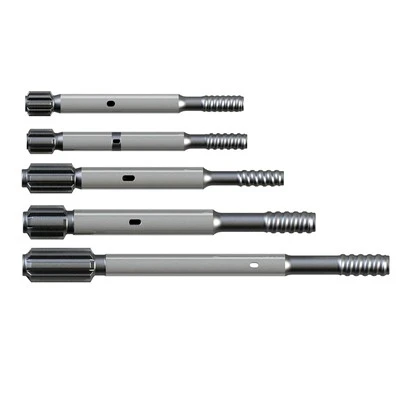
Shank Adapters References
- Drilling Industry Association. (2022). Best Practices for Hard Rock Drilling Components.
- Smith, J. (2021). The Science of Tungsten Carbide Performance in Rock Drilling. Journal of Mining Engineering, 73(4), 45-52.
- Carter, L. (2020). Downtime Costs in Construction and Mining Operations. International Journal of Construction Management, 18(2), 112-119.
- Global Drilling Supply Council. (2023). Button Bit Design and Manufacturing Standards for Industrial Drilling.
Super Rock Machinery Equipment (Qingdao) Co., Ltd.
We are one of the most professional button bit manufacturers and suppliers in China, featured by quality products and good price. Please feel free to buy advanced button bit for sale here from our factory. Welcome to view our website for more information.
Address: No. 45, Pengwan Road, Qianwan Bonded Port Area, Qingdao Sub-district, Free Trade Pilot Zone, Shandong China
E-mail: sales@superrocktools.com
WebSite: https://www.superrocktools.com/
