Let’s cut to the chase—if you’re deep in the renewable energy game, you’ve probably spent way more time than you meant to geeking out over solar inverters and wind turbine blades, right? I get it. Those are the flashy parts, the ones that make headlines and look cool in a press release. But here’s a secret I’ve learned over 12 years as a power transformer supplier: none of that shiny renewable kit does a damn thing without the right transformer holding it all together. Let’s break that down, no fancy jargon, just real talk from someone who’s actually dealt with this gear day in and day out. Power Transformer
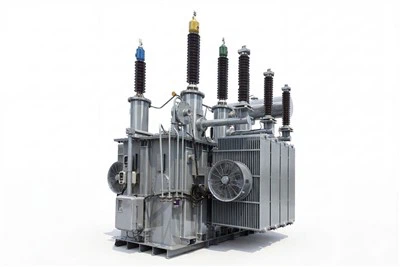
First, let’s ground this in how renewable energy even gets from where it’s made to where it’s used. Solar panels on a rooftop or a wind farm out in the middle of nowhere generate power at what’s called “distribution voltage”—think low numbers, like 480 volts for solar arrays, or even a few thousand for big wind turbines. That’s fine for pumping juice a short distance, but if you’re trying to send it 50 miles to a city that needs it, low voltage is a nightmare. The longer the line, the more power bleeds out as heat—like how a speaker gets warm if you crank it too high, but way worse. Transmit power at low voltage, and you’ll lose half the juice before it gets downtown. That’s a waste, full stop.
A power transformer fixes that. It steps up that low, wimpy voltage from your solar or wind setup to high-voltage lines—we’re talking 115kV, 230kV, even 500kV for big grids. Higher voltage means lower current, so less energy lost in transmission. Simple as that. No transformer, no long-haul power. You might as well be powering a single neighborhood with a portable generator, not feeding a whole city.
But wait, it’s not just sending power long distances. Once that high-voltage juice gets to a substation near the suburbs, the transformer steps it back down to distribution voltage—12kV or 25kV, something your local power lines can carry to houses and shops. And then? There’s the little transformers on utility poles in your neighborhood that knock it down again to 120/240 volts for your fridge and TV. I know, I know—those pole ones look tiny compared to the big substation units. But every single one of those is doing the same core job for renewables, no matter the size.
Now, renewables have their own unique mess that makes transformers even more critical than with old fossil fuel or nuclear plants. Fossil fuel plants crank out steady, predictable power—you can set a coal plant to make exactly X amount of power, all day, every day. But solar? It only works when the sun’s up, and clouds can tank output in minutes. Wind? It’s windy at 2 a.m. when no one’s awake, and dead as a doornail on some afternoons. That’s called “intermittency,” and it’s the biggest headache in the renewable space right now.
Transformers have to handle that ups and downs. A good transformer doesn’t just step voltage up or down—it can adjust on the fly to match the chaotic flow of renewable power. I’ve seen solar farms where output jumps from 10MW to 80MW in 10 minutes as clouds pass. If the transformer can’t keep up, it fries the gear, or causes blackouts. That’s why we build our units with extra smart monitoring—stuff that alerts us before a problem even happens, so operators can tweak things without shutting the whole farm down. No more scrambling at 3 a.m. when the wind dies and the transformer starts freaking out.
Another big one: grid stability. The grid hates weird power. Solar and wind generate AC power, but sometimes there are little glitches in frequency or voltage—like a radio signal cutting in and out. If that gets bad, the whole grid can crash. Transformers act like a buffer here. They smooth out those glitches, make sure the power going into the grid is clean enough for hospitals and factories to use. I had a client last year with a wind farm in the Plains—they were having issues with voltage spikes every time a gust hit. We swapped out their old transformer for a custom unit with better voltage regulation, and their complaints dropped to zero. They saved like $120k in downtime costs in the first six months. That’s not chump change.
Wait, let’s talk about offshore wind too—everyone’s building those big wind farms out in the ocean now. The turbines are 30 miles or more from shore, so the power has to travel way farther than on land. The voltage has to be even higher there, because losing power over saltwater lines is way worse. We build specialized transformers for offshore that can handle the salty air, the wind, the vibration of being out on a platform. No one’s sending a standard land transformer out to the middle of the ocean. It’d rust apart in a year. That’s where our custom builds come in—we don’t just sell off-the-shelf stuff. We work with wind farm engineers to build units that fit their exact site, whether it’s offshore, a desert solar farm, or a valley with tight space for a substation.
And let’s not forget battery energy storage systems (BESS), which are getting huge for fixing that intermittency problem. You charge batteries when the sun is shining or wind is blowing, then discharge when it’s dark or calm. But batteries output DC power, not AC, and at low voltage. You need a transformer to convert that DC to AC and step it up to grid voltage so you can send that stored power to homes. Same when feeding the batteries from the grid—you need a transformer to lower the voltage before it hits the battery bank. Transformers are the middleman between renewables, storage, and the grid. Without them, BESS is just a big paperweight.
Now, I know some of you might be thinking, “Okay, that makes sense, but why choose your transformer supplier over anyone else?” Look, anyone can slap a label on a generic transformer. But renewables don’t play generic. We’ve been in this space so long, we know the specific pain points: a solar farm in Arizona has to handle 110°F heat and dust that clogs every part, so we seal our units extra tight. A wind farm in the Northeast has to handle freezing winters and ice on the blades that causes power spikes, so we build ours with better insulation. We don’t just say “we make transformers”—we solve the problems that come with renewable sites that other suppliers ignore.
I also can’t stress enough how reliable these units have to be. When a coal plant goes down, you can fire up another one. When a wind farm transformer goes down, that’s 50 turbines offline, costing tens of thousands of dollars an hour in lost power. We build our transformers with extra components—better core materials, higher quality windings, way more testing than the old fossil fuel units. Last year, a tornado hit a wind farm in Texas. Their old transformer from another supplier was totaled, but the two we installed three years earlier? No damage, not even a scratch. That’s the kind of peace of mind you need when your whole operation hinges on one piece of gear.
Another thing: efficiency. Old transformers waste about 2-3% of power as heat. Our latest models? Less than 0.5%. Over the life of a 20-year solar farm, that’s millions of dollars in extra power going to customers, not wasted as heat. Operators love that because it boosts their revenue, and it’s better for the environment too—less lost power means we don’t need as much extra generation to make up for it. Win-win.
Let’s be real, the energy transition isn’t going to happen without transformers. Everyone’s focused on building more solar panels and wind turbines, but without the right transformers to connect them to the grid, none of that capacity matters. I’ve seen so many projects delayed or scrapped because their transformer supplier didn’t understand their unique needs. We don’t do that. We show up to the site, talk to the engineers, ask the right questions, and build a transformer that fits like a glove.
So if you’re working on a renewable project—whether it’s a small rooftop solar array for a business, a big wind farm, an offshore project, or a BESS facility—don’t sleep on your transformer. It’s not a supporting player. It’s the backbone. If you need someone who gets renewables, not just generic power gear, hit me up. We can walk through your site, talk about your pain points, and figure out a transformer that works for you. No sales pitch, no hidden fees, just real solutions for real renewable projects.

And before you go, remember: the next time you turn on your lights and they don’t flicker because the local wind farm’s power is flowing smoothly, there’s a good chance a transformer we built is right there, making it happen. That’s why I do this—helping move the energy transition forward, one good transformer at a time.
Pole Mounted Transformer References:
- U.S. Energy Information Administration. (2023). Renewable energy technology characteristics: Solar, wind, and battery storage.
- International Energy Agency. (2022). Grid integration of variable renewables: The role of power electronics and transformers.
- North American Electric Reliability Corporation. (2021). Transformer performance in renewable-dominated grids.
- IEEE Power & Energy Society. (2020). Special considerations for transformers in offshore wind applications.
Jiangsu Yuantong Electric Co., Ltd.
As one of the most experienced power transformer manufacturers and suppliers in China, we also support customized service. Please rest assured to wholesale bulk high quality power transformer in stock here from our factory. Contact us for more details.
Address: No. 202, Qiaogang Road, Xicheng Subdistrict, Hai’an City
E-mail: Trey@jsytelectric.com
WebSite: https://www.jsytelectric.com/
