Hey folks, let’s cut to the chase – if you’re in structural components (bridges, steel beams, utility poles, all that heavy stuff) or run a hot-dip galvanizing line for ’em, you’ve probably wondered: why all the fuss over drying parts before they go into the zinc pot? I’m not here to spit textbook jargon at you – I’m a supplier of hot-dip galvanizing equipment, I’ve seen firsthand what happens when you skip that step, and trust me, it’s not pretty. Let’s break this down like we’re chatting over a coffee after a long shift. Structural Components Hot-dip Galvanizing Equipment
First, let’s set the scene. Hot-dip galvanizing’s whole thing is dipping super hot steel (usually around 80°F, give or take – we pre-heat it a bit before galvanizing) into molten zinc that’s cranked to like 840°F. That reaction between iron and zinc is what makes that tough, corrosion-resistant layer that makes structural parts last 50+ years, even in coastal or industrial areas. But if your part is wet when it hits that zinc? Forget the good layer – you’re looking at a mess.
Here’s the basic science no one likes to explain simply: water and molten zinc do not play nice. Water has this thing called “vapor expansion” – turn liquid into gas instantly, and it expands 1,700 times its volume. Think about a water bottle in a microwave: it blows up, right? Multiply that force by the size of a 40-foot steel I-beam full of trapped water, and you’ve got a mini explosion. That’s not just a safety hazard – it’s a wrecked zinc pot, ruined parts, and downtime that costs you thousands, maybe tens of thousands, in a single day. I’ve had a customer call me at 2 a.m. once because they skipped drying a batch of bridge girders, and the blast blew a hole in their zinc kettle liner. They were down for 3 weeks waiting on a replacement part – not exactly a win.
But safety’s only part of it. Even if you get lucky and the water doesn’t vaporize hard enough to explode? You’re still left with garbage galvanizing. Trapped moisture or leftover pickle solution (wait, right, before galvanizing you pickle steel in acid to remove mill scale – that acid has to rinse off, too) creates “blowholes” and “puddles” in the zinc coating. Those holes are like a welcome mat for rust – they’ll start corroding in 2-3 years, not 50. And if you’re working on structural components, that’s a huge deal. Bridges, parking garage beams, transmission towers – their whole job is to hold up heavy loads. A corroded coating means the steel underneath is eating away, which can lead to structural failure. No one wants to be the guy who has to explain to a state DOT why their bridge needed repair 10 years early.
Wait, let’s talk about the rinse step, because that’s where most people mess up. After pickling, you rinse the steel in water to get rid of all the acid residue. If that rinse water has any left-over acid or is just plain dirty, it can leave a thin film on the steel surface that reacts badly with zinc too. But even clean rinse water – if it’s not fully dried – is the same problem. A lot of small galvanizing shops try to cut corners here: they’ll just let parts air dry for 10 minutes, maybe blast ’em with a leaf blower, and call it a day. That works for tiny parts, but structural components? I-beams are 60 feet long, hollow columns have crevices and tight corners, gusset plates have folds that trap water. Air drying might get the top surface, but the inside of that hollow beam? Still damp. The folds in the gusset? Water’s hiding in there. By the time you dip ’em, that trapped water turns to steam, and boom – blowholes.
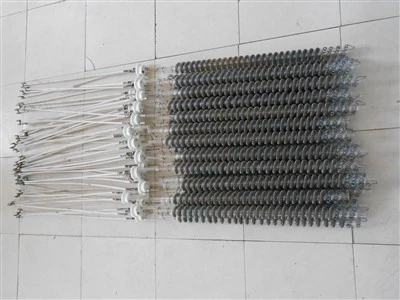
So what’s the right way to dry, and why does it matter for your equipment too? (Since I sell the drying ovens and systems that tie into your galvanizing line, I’m biased, but hear me out.) Industrial hot-dip galvanizing drying isn’t your home clothes dryer. We use convection drying, infrared heating, sometimes even vacuum systems for parts with super tight crevices – but the key is consistent, uniform heat across the entire part. Structural components are big, weirdly shaped, so you can’t just blast hot air at one end. If you do, the outside dries, but the inside still has moisture. That’s when you get the bad reactions I mentioned earlier.
Another thing: pre-heating. A lot of people confuse pre-heating with drying, but they’re two separate steps. Pre-heating gets the steel up to near zinc temperature so the zinc doesn’t cool down too much when you dip – that’s what gives you a smooth, uniform coating. But if you skip drying, that pre-heat just turns the trapped water into steam faster, making the blowholes worse. The two steps work together, not against each other.
Let me share a real customer example. A mid-sized shop in the Midwest was making utility poles for a local power company. They were having a ton of rejections: the power company was sending back poles with pitting and uneven zinc, saying they didn’t meet their corrosion specs. I went to visit their line, and I watched them: after rinsing the poles, they stacked them on a rack, turned on a small fan, and walked away for 15 minutes. I checked a random pole with a moisture meter – it still had 12% moisture content. That’s way too high. We installed a continuous convection drying oven tailored for their pole line – a system that blows regulated, heated air through every hollow section of the pole, not just the surface. After that, their moisture content dropped to under 0.5% every single time. Their rejection rate went from 18% to less than 1%. They saved over $50,000 a year on rejections, and their client was so happy they gave them a 2-year extension on their contract. That’s the kind of win we’re talking about.
Wait, what about cost? I know shop owners hate adding equipment costs, but think about it: downtime, rejections, damaged zinc pots, safety incidents – all of that is way more expensive than a good drying system. A lot of guys try to cut costs by skipping drying, but it’s a false economy. I’ve seen shops close because they couldn’t afford to fix the damage from one bad batch that exploded their zinc kettle. On the flip side, a solid drying line adds to the value of your product. Structural components with perfect, uniform galvanizing command a better price, and they’re way more reliable for your customers.
Also, let’s not forget environmental stuff. When you have water mixing with zinc at high temps, it creates fumes – zinc oxide fumes, and leftover acid fumes from the rinse. Those fumes are toxic, and you have to vent them, which adds to your environmental costs. A good drying system removes all the moisture before dipping, so those fumes are way reduced. That means you’re not spending as much on venting systems, you’re complying easier with OSHA and EPA rules, and your workers aren’t breathing in those nasty fumes. Win-win for everyone.
Now, let’s clear up a common myth: “I can just dip wet parts longer, or in hotter zinc.” No. Hotter zinc will make the steam expand faster, worse explosions. Longer dipping time? Won’t fix the trapped water – it’ll just make the blowholes deeper and the corrosion worse. It’s not a band-aid, it’s a broken arm. Drying is non-negotiable, not an optional extra.
So, if you’re running a structural components hot-dip galvanizing line, what should you be looking for in a drying system? First, it needs to handle the size and shape of your parts. No one-size-fits-all oven for I-beams, 40-foot poles, and gusset plates. Second, it needs consistent moisture removal – not just surface drying, but getting into all those nooks and crannies. Third, it should integrate with your existing line so it doesn’t slow down production. A drying system that’s a bottleneck is as bad as no drying system at all.
I know I’m not here to sell you a product right now – well, okay, I am, but I’m also here to tell you what I see every day in the field. We don’t just sell hot-dip galvanizing equipment, we work with structural component shops to fix their problems. If you’re tired of rejections, downtime, or safety scares because you’re skipping the drying step, let’s chat. We can walk through your line, see where the hold-ups are, and recommend a drying system that fits your needs, no sales pitch fluff, just real solutions.
At the end of the day, structural components are the backbone of our infrastructure. Bridges that hold cars, poles that hold power, buildings that hold people – their durability depends on that zinc coating. And that coating starts with a good dry. Skip that, and you’re playing with fire. Don’t let a small cost-cutting step ruin your business, or worse, cause a problem down the line that hurts someone.
If you’re ready to stop dealing with galvanizing issues that boil down to moisture, reach out. No generic sales calls, no spam, just us talking about what your line actually needs.
Hot Dip Galvanizing Equipment Parts references
- Hot-Dip Galvanizing: Principles and Practice, American Galvanizers Association
- "Effect of Moisture Content on Zinc Coating Uniformity in Structural Steel Galvanizing", Journal of Construction Steel Research, 2021
- Occupational Safety and Health Administration (OSHA) Guidelines for Hot-Dip Galvanizing Safety, 2022
- "Cost-Benefit Analysis of Drying Systems in Medium-Scale Hot-Dip Galvanizing Operations", International Journal of Industrial Corrosion, 2020
Jinzhou Hongri Galvanizing Equipment Co., Ltd.
As one of the most professional structural components hot-dip galvanizing equipment manufacturers and suppliers in China, we’re featured by quality products and good price. Please rest assured to buy durable structural components hot-dip galvanizing equipment for sale here from our factory. We also accept customized orders.
Address: Yingpan Industrial Park, Taihe District, Jinzhou City. Address: No. 90, Gongwei Street.
E-mail: rsea.jz@163.com
WebSite: https://www.hrgalvanize.com/
