If you’ve ever watched a factory robot arm pivot to weld a car frame, or seen a packaging line’s cylinder push juice bottles into cardboard cases, you’ve been relying on a part that most people never notice: the reciprocating pneumatic seal. As a pneumatic seal supplier, I get asked this question all the time—often by new engineers who just walked into their first production line, or small business owners who are troubleshooting a faulty cylinder that’s halting their entire shift. Let me break this down plainly, no jargon overload, and explain why these seals are so critical, and what makes them different from other types of seals you might have heard of. Pneumatic Seal
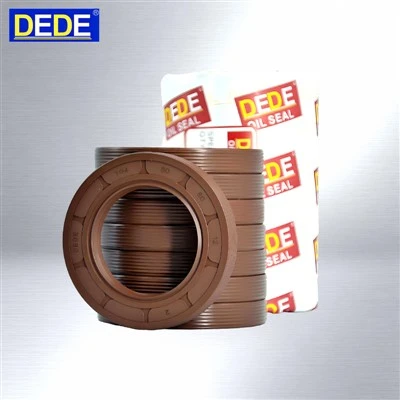
First, let’s ground the basics: reciprocating motion is just back-and-forth linear movement, right? Unlike a turbine’s spinning rotor, or a valve’s quarter-turn swing, a pneumatic cylinder’s piston slides straight up and down, or side to side, thousands of times a minute in high-volume plants. A pneumatic system runs on compressed air—it’s cheap, safe, doesn’t catch fire like hydraulic fluid, and is ideal for clean environments like food processing or electronics manufacturing. But that compressed air is under pressure—usually between 80 and 120 PSI for most standard industrial setups, sometimes higher for heavy-duty applications. If there’s any gap between the piston (which moves) and the cylinder barrel (which stays still), that air leaks out. No seal, no pressure, no motion. That’s where a reciprocating pneumatic seal comes in. It’s a custom-molded (or sometimes machined) ring-shaped component that sits in a groove on the moving piston, or occasionally on the cylinder rod, to block compressed air from escaping past the gap while still letting the piston slide smoothly.
Wait, you might be thinking: aren’t all seals the same? Why “reciprocating” specifically? Let’s clarify. Seals for rotary motion (like in a pump shaft) have to handle constant spinning, so they’re designed to distribute friction evenly around a rotating surface. Static seals, on the other hand, are for parts that never move—like the gasket between a cylinder’s end cap and its barrel, or the O-ring on a pipe fitting. Reciprocating seals have a way harder job. They’re rubbing against the cylinder wall on every back-and-forth stroke, thousands of times a day, so they have to balance three competing needs: they have to block air leakage, keep friction low enough that the piston doesn’t drag and waste energy, and hold up to wear from that constant sliding. Too much friction, and the cylinder will slow down, overheat, or even seize mid-cycle. Too little sealing, and air leaks out, pressure drops, and your machine does nothing. It’s a tight balance.
Let’s talk about the types of reciprocating pneumatic seals you’ll most often see in industrial applications, because not all are built the same. The first one I think of is the U-cup seal, sometimes called a lip seal. This is the workhorse for most general-purpose cylinders. It’s shaped like an upside-down U, with a flexible lip that presses against the cylinder wall when air pressure builds up behind it. The higher the pressure, the tighter the lip seals—so it’s great for varying load conditions. You’ll find U-cups in everything from small hobbyist pneumatic tools to large packaging line cylinders. Then there are piston seals, which are specifically designed to sit on the piston itself, rather than the rod. These are often low-friction materials like PTFE (Teflon) blended with fillers like glass or bronze, because they can slide against the hard-anodized aluminum or steel cylinder barrels without wearing out too fast. Rod seals are a different story—they go on the part of the piston that sticks out of the cylinder (the rod that connects to the machine’s moving part) and have to handle not just air pressure, but also any side load or bending force that comes from the arm or tool attached to the rod. Some rod seals also have a backup ring, which is a rigid ring that keeps the seal from squeezing too hard into its groove at high pressure—another common failure point we see in the shop.
Speaking of failures, let’s get real: as a seal supplier, I’d be lying if I said these parts never wear out. A lot of the questions I get are from managers whose production line shut down because a seal failed. What causes that? Let’s run through the most common issues. First, wear and tear. Even the best PTFE blend will eventually wear down if it’s sliding against a dirty cylinder wall. If the air line’s filter isn’t working, tiny metal shavings, dust, or moisture from the compressed air get into the cylinder and act like sandpaper on the seal. I’ve seen U-cups wear through in a week in a plant that skipped routine filter changes—saves $20 on a filter now, costs you $10,000 in downtime and overtime later. Then there’s misalignment. If a cylinder’s rod isn’t straight, or the machine it’s mounted to pulls the rod off at an angle, that creates side load that pushes the seal harder against the wall, causing uneven wear. We had a customer last year whose robot arm was off by just a few degrees, and their rod seals wore out three times faster than expected—once we aligned the mount, their seal life went back to normal.
Another big one: material mismatch. A lot of people don’t think about this, but the seal material has to work with your environment. If you’re working in a food processing plant, you can’t use a general-purpose rubber seal that might leach chemicals into the product. You need FDA-compliant materials like silicone or EPDM (ethylene propylene diene monomer) that are safe for food contact. For high-temperature applications, like an oven door opener in a bakery, standard rubber seals will melt—you need a heat-resistant material like Viton (fluoroelastomer) that can handle temperatures up to 400°F. For cold environments, like a frozen food packaging line, you need a seal that doesn’t harden and crack at 0°F—nitrile rubber is common there, because it stays flexible in cold conditions. Picking the wrong material is the easiest way to get a premature seal failure.
Now, why does this matter to you, whether you’re a plant manager, a maintenance technician, or someone designing a new pneumatic system? Let’s put it in tangible terms. A single pneumatic cylinder might cost $500 to buy, but the cost of a line shutdown can be thousands of dollars an hour—depending on what you’re making. We once had a beverage company that made soda cans in a plant that ran 24/7. A seal on their case-packing cylinder failed at 2 a.m. on a Sunday. They had to fly a maintenance technician in, who had to wait for a replacement seal to be delivered, and the line was down for 12 hours. The total cost? Over $120,000 in lost production. That’s the ripple effect of a $15 seal. So choosing the right reciprocating pneumatic seal isn’t just a small parts purchase—it’s a way to keep your line running.
A common question I get: can I use a static O-ring instead of a reciprocating seal? Short answer: no, not usually. O-rings are great for static applications, but they’re too soft and have too much friction for back-and-forth motion. They’ll twist, roll, and tear on every stroke, leading to leaks and failure. We see people try this all the time as a cheap fix, and it always ends badly. The right reciprocating seal is designed for that dynamic motion—its shape, material, and fit are all engineered to slide smoothly while sealing, something a generic O-ring can’t do.
Another point: installation matters. Even the best seal in the world will fail if it’s installed wrong. I’ve had customers send back seals that were “broken” only to find out they installed the U-cup upside down, so the lip was facing the wrong way, and air pressure was pushing the lip away from the wall instead of against it. Or they scratched the seal’s lip when pushing it into the groove, creating a tiny hole that leaks. That’s why we always include a simple installation guide with every order—no fancy tools needed, just a soft plastic or wooden tool to push the seal in, not a screwdriver or a sharp pipe.
Let’s talk about the future of reciprocating pneumatic seals too, because this industry is always evolving. With factories moving toward predictive maintenance, seals are getting smarter. There are now sensor-integrated seals that can track wear in real time, sending alerts to your maintenance team before a failure happens. That’s a game-changer for high-volume plants, where unplanned downtime is the biggest cost. We’re also seeing more sustainable materials—recycled PTFE, bio-based rubber blends, that reduce waste without sacrificing performance. As pneumatic systems become more energy-efficient, seals are also being designed to have even lower friction, so less compressed air is wasted, saving energy and cutting costs for operators.
At the end of the day, a reciprocating pneumatic seal is a small part, but it’s the heart of any pneumatic cylinder’s ability to do its job. Without it, your robot arms don’t move, your packaging lines stop, your factory stands still. That’s why suppliers like us don’t just sell rings of rubber or Teflon—we work with customers to figure out which seal is right for their application, whether that’s a small food processing cylinder, a heavy-duty automotive assembly line, or a cleanroom for electronics manufacturing. We’ve seen the bad, we’ve seen the good, and we know that the right seal can make all the difference between a line that runs smoothly for years, and one that shuts down every other week.
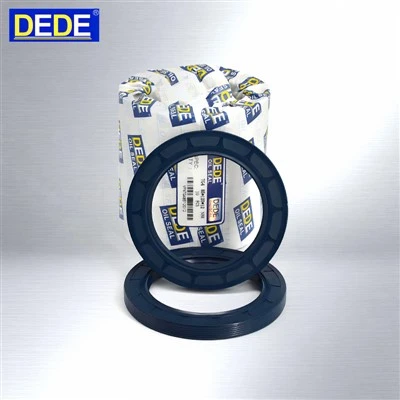
If you’re dealing with seal leaks, premature failures, or you’re designing a new pneumatic system and want to make sure you get the right part for the job, reach out to us to discuss your specific needs. We can help you pick the right material, size, and type of reciprocating pneumatic seal that fits your application, no matter how big or small your project is. Don’t let a small part turn into a big problem—let’s work together to keep your machines running.
Wind Turbine Seal References
- Pneumatic seals: design, selection, and performance guidelines. Fluid Power Dynamics Association.
- Industrial reciprocating seal application and failure analysis. Journal of Industrial Maintenance and Engineering.
- Compressed air system best practices for seal longevity. Occupational Safety and Health Administration (OSHA) Technical Report.
- Material compatibility for pneumatic seal applications. Society of Tribologists and Lubrication Engineers (STLE).
DEDE SEAL Co., Ltd.
DEDE Seal Co., Ltd. is one of the most experienced pneumatic seal manufacturers and suppliers in China for over 35 years, featured by quality products and good price. Please feel free to buy bulk customized pneumatic seal made in China here from our factory. Welcome to contact us for pricelist.
Address: Hunan Road, Pudong New Area, Shanghai, China
E-mail: info@dedeseal.com
WebSite: https://www.dedesealing.com/
