Yo, if you’re working on plumbing and using hex bolts, leaks are basically the last thing you want—they turn a quick fix into a moldy mess, waste water, and make you look like you skipped a step. As a hex bolt supplier who’s been in the game for over a decade, I’ve seen way too many folks mess up the small stuff that causes those leaks. This isn’t about bragging; it’s about sharing the actual hacks I’ve learned from plumbers, DIYers, and even my own mistakes over the years. Hex Bolt
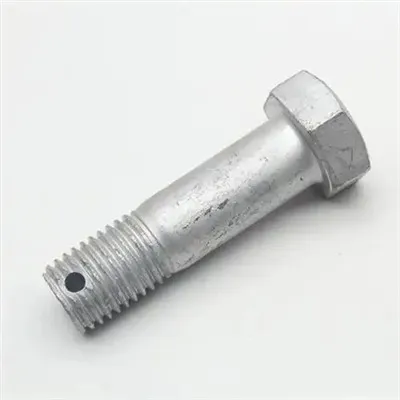
First off, let’s cut to the chase: most leaks with hex bolts in plumbing don’t happen because the bolt is bad. Yeah, sometimes cheapo bolts snap, but 9 times out of 10, it’s something you can fix before you even turn a wrench. Let’s start with picking the right bolt for the job—this is non-negotiable. I’ve had guys come in grabbing the first hex bolt they see for a pipe fitting, and 9 times out of 10, that’s stainless steel for general stuff, right? Wait, no—plumbing environments have moisture, chemicals from pipe cleaners, and even occasional exposure to outdoor elements (if you’re doing exterior spigots). So skip the regular carbon steel bolts—they rust like crazy, and rust creates gaps. Stick to 304 or 316 stainless steel hex bolts if you’re on a budget; 316 is for saltwater or super harsh areas, but 304 works for 90% of indoor plumbing. Also, don’t overlook the size. If the bolt is too short, it won’t clamp down tight enough; too long, and it might poke through the pipe fitting, creating a hole. Measure the “grip length” (that’s the part of the bolt that goes through the material, not the threads sticking out) wrong, and you’re asking for a leak. I always tell folks to add 1/8 inch to the total thickness of the two parts they’re bolting together—threads need to engage on both sides, not just float around.
Next up: prep work. This is where most people slack, and it’s a killer. When you’re bolting two plumbing parts—like a flange to a water heater, or a valve to a pipe—you can’t just wipe the face with a rag and call it a day. Those surfaces need to be flat and clean. Even a tiny bit of debris, like pipe scale or a strand of Teflon tape, will create a gap between the flange and the pipe, which makes the hex bolt’s clamping force useless. Here’s what I do: take a wire brush (the one for steel, not plastic) and scrub both mating surfaces until they’re shiny, no gunk left. If the flange has a little rust or pitting, grab a flange facing tool—yes, they’re cheap, and it smooths out those little divots so the gasket seals right. Speaking of gaskets! Wait, do not skip the gasket. I’ve seen plumbers skip gaskets to “save time” and end up redoing the job 3 months later. Gaskets fill in those tiny irregularities in the mating surfaces that even the best hex bolt can’t squeeze flat. Use the right gasket too—rubber is for most hot/cold water, but if you’re dealing with gas lines, you need a Neoprene or PTFE gasket, not rubber. And make sure it’s the exact size for your flange—too small, and it slips out; too big, and it gets crumpled when you tighten bolts.
Now, torque—this is the big one. Torque is how much force you use to tighten the hex bolt, and too little means it’s loose, too much means the bolt stretches or the flange breaks. A lot of DIYers just use a regular wrench and “crank it till it feels tight”—that’s how you get leaks. I’m not saying you need a fancy torque wrench for every job, but if you’re working on a main water line or something high-pressure, it’s worth the $20 investment. For 3/8-inch 304 stainless hex bolts, torque to 25-30 ft-lbs; 1/2-inch is 50-55 ft-lbs. Wait, but here’s a pro tip: tighten the bolts in a crisscross pattern, not in a circle. If you tighten bolt 1 all the way, then bolt 2, 3, 4, you’ll warp the flange and create gaps. Think of it like tightening a car tire lug nuts—left front, right rear, right front, left rear. Do half the torque on first pass, then full torque on the second pass. That evens out the clamping force, so every part of the gasket is sealed evenly. I’ve had a guy come to me once, panicking because his water heater flange was leaking—turns out he tightened all 6 bolts in a circle, warped the aluminum flange, and even the best torque wouldn’t fix it. Crisscross pattern saved him a whole new flange and a day of work.
Wait, what about threads? Are you using Teflon tape or pipe thread compound on the bolt threads? Wait, no—wait, hold on. If the bolt is going through a flange (which is a solid metal part), you don’t need Teflon tape on the bolt threads. If you’re threading the bolt into a pipe (like a threaded pipe connection), maybe, but most plumbing hex bolts are for flanges or fittings that have unthreaded holes. Here’s the mistake: some guys wrap Teflon tape around the bolt threads, and when they tighten it, the tape compresses and oozes out, creating a gap. Instead, if the mating surface needs a seal, apply a thin layer of pipe joint compound to the gasket or the mating surfaces, not the bolt threads. That way, it seals without clogging threads or getting in the way of the bolt’s grip. Also, check the bolt threads themselves—if they’re corroded or have burrs, that’ll tear the gasket or prevent the bolt from seating flat. A quick run with a thread chaser (a cheap tool that cleans up threads) fixes that in 10 seconds.
Another thing: vibration. Wait, plumbing systems vibrate—water heaters expand, washing machines shake, pipes carry pressurized water that moves. If your hex bolt doesn’t have a lock washer, it’ll slowly loosen over time, right? Flat washers are great for distributing the bolt’s force so it doesn’t dig into the pipe or flange, but lock washers (the split ring ones or tooth lock washers) prevent loosening from vibration. For high-vibration areas—like a connection to a washing machine or a water heater’s drain flange—use a split ring lock washer under the nut (or under the head of the bolt, depending on which side is accessible). I always include a free set of lock washers with any hex bolt order for plumbing jobs, because it’s such a simple fix for a common problem. Don’t skimp here—no lock washer = loose bolt = leak.
Wait, let’s talk about corrosion. Even 304 stainless steel bolts can corrode if they’re exposed to chlorine-rich water (like from a municipal water supply) for years, or if they’re in contact with dissimilar metals. Oh, right—galvanic corrosion! If you’re bolting a copper pipe to a steel flange, the two metals react, and the bolt ends up rusting through in a few years. How to prevent that? Use a dielectric coupling between the dissimilar metals, or apply a anti-seize compound to the bolt. Anti-seize stops the metals from reacting, so the bolt stays intact and the seal doesn’t break. I’ve seen this happen on outdoor spigots where copper pipe is bolted to a cast iron flange—guys didn’t use anti-seize, and the bolt corroded so bad they couldn’t turn the nut a year later, leading to a burst pipe. Easy fix, right? Just coat the bolt with anti-seize before installation.
Let’s run through a real quick example to tie this all together. Say you’re replacing a toilet supply line. The flange on the toilet needs to bolt to the toilet’s base, right? Here’s the step-by-step to avoid leaks: 1. Grab 1/4-inch 304 stainless hex bolts, grip length 3/4 inch (measure the thickness of the toilet base plus the flange, add 1/8 inch). 2. Scrub both the toilet base and the closet flange until no old wax or debris is left—use a putty knife first to scrape off old wax, then a wire brush. 3. Put a new wax gasket (or a rubber gasket, if you prefer) on the flange, make sure it’s centered. 4. Drop the bolts through the flange holes, add a flat washer, then a split ring lock washer on each bolt. 5. Tighten each bolt in crisscross order—start with bolt 1, turn 1/4 turn, bolt 3, 1/4 turn, then bolt 2, 1/4 turn, bolt 4, 1/4 turn. Do this twice so you don’t over-tighten and crack the toilet base. Boom—no leaks. I’ve watched DIYers do this wrong a hundred times: they use old rusty bolts, skip the lock washer, tighten all bolts at once, and end up with a leak that gets their bathroom floor all wet.
Now, I know a lot of people think bolts are just bolts, but when it comes to plumbing, the tiny details make all the difference. And as someone who’s been supplying hex bolts for plumbing jobs for years, I’ve tested every tip here—some worked, some didn’t, and I cut out the garbage so you don’t have to. The worst part is fixing a leak: you have to shut off the water, drain the pipe, take the old bolts out, replace parts, and it costs way more time and money than just doing it right the first time.
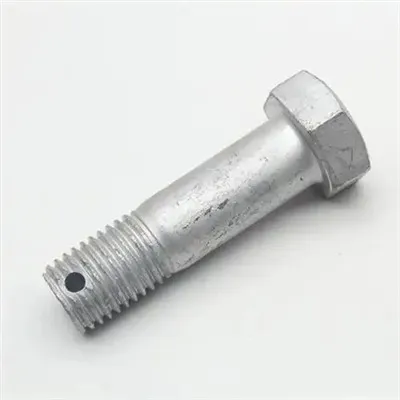
If you’re gearing up for a plumbing project—whether it’s a small faucet fix, a new water heater, or a backyard spigot—don’t mess around with random bolts from the hardware store. We’ve got the right hex bolts for every plumbing job, plus the lock washers, anti-seize, and gasket tips to make sure your install stays leak-free. Just reach out to our team to chat through your project—we’ll help you pick exactly what you need, no guesswork, no overpriced stuff. We’re here to make your life easier, not add another headache.
Bolts References
Plumbing Engineering Design Handbook, Volume 2: Piping Systems and Components, American Society of Plumbing Engineers, 2019.
Stainless Steel Fasteners for Corrosive Environments, Fastener Technology International, 2021.
Domestic Water System Installation Guidelines, International Association of Plumbing and Mechanical Officials, 2020.
Jiaxing Jinling Hardware Technolgy Joint Stock Co., Ltd.
As one of the most experienced hex bolt manufacturers and suppliers in China, we also support customized service. Please feel free to buy bulk high-grade hex bolt made in China here from our factory. For quotation and price list, contact us now.
Address: No.32, Shenjiadai, Xuyouche Village, Qinshan Subdistrict, Haiyan County, Zhejiang Province, China
E-mail: jlzxl@jinlingfstn.com
WebSite: https://www.china-nut-factory.com/
