Hey there, if you’ve ever worked in animal nutrition, livestock farming, or even pet food production, you know one thing: a one-size-fits-all feed mixer just doesn’t cut it. Maybe you’re raising specialty goats that need a precise blend of alfalfa and mineral supplements, or running a aquafeed mill that needs to mix tiny, delicate micro-ingredients without crushing them. Or maybe you’ve got a super niche requirement—like mixing in probiotics that break down if they spin too fast, or balancing feed for a rare poultry breed with specific amino acid needs. A lot of folks hit us up and ask straight: “Can your feed mixing equipment be customized to my exact needs?” Spoiler: Yes, 9 times out of 10, it can. And today, I’m gonna break down why that works, how we pull it off, and why it’s not just a nice-to-have—it’s non-negotiable for most operations. Feed Mixing Equipment
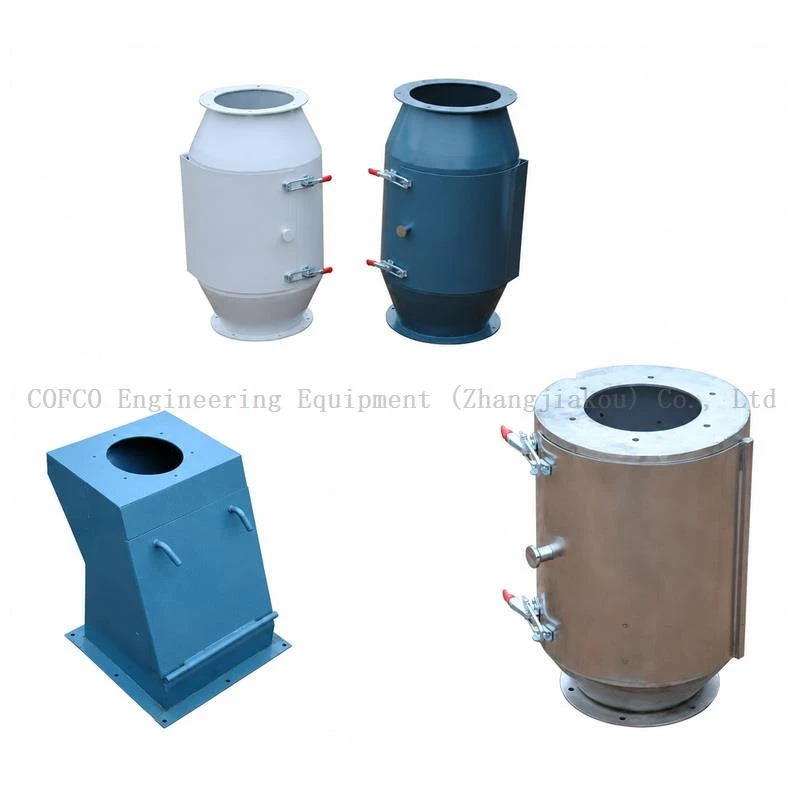
First, let’s get one thing straight: generic mixers are fine for small, basic setups. If you’re mixing just corn, soy, and a standard mineral block for hogs, a off-the-shelf batch mixer might get the job done… eventually. But that “eventually” part is key. Generic units don’t account for variables that are make-or-break for feed quality. Let’s say you’re running a 5,000-head dairy operation. The last thing you want is uneven mixing that leaves some cows with too much calcium (leading to urinary issues) and others with not enough (causing weak bones). Or if you’re making organic feed, you can’t have a generic mixer that’s been used for non-organic ingredients before—cross-contamination is a huge red flag for organic certifications. That’s where customization steps in, because it’s built around your unique context, not a pre-drawn blueprint.
Let’s talk about the customization options we actually deliver, not just the fluff sales people use. First, size and batch capacity. We don’t just stock 1-ton, 5-ton, and 10-ton mixers. If you’re a small hobby farm doing 500 pounds a day, a standard mini mixer might be too big (wasting energy) or too small (needing to run 10 times a day, which is inefficient). Or if you’re a large commercial mill ramping up to 20 tons an hour to meet a new aquafeed contract, we can tweak the mixer’s drum dimensions, feed inlets, and discharge valves to handle that high volume without spilling or creating bottlenecks. Last year, we worked with a tilting aquafeed producer who needed a 15-ton per hour unit, but their existing warehouse had a low ceiling. We didn’t just tell them to pick a smaller model—we redesigned the vertical height of the mixer’s mixing chamber to fit their space, no performance loss. That’s not “modification,” that’s customization.
Next, and this is super important, mixing speed and intensity. Different ingredients need totally different treatment. Powdered vitamins, probiotics, and flavor additives are called “micro-ingredients” because they make up less than 1% of the feed, but they’re non-negotiable for animal health. If you throw them into a high-intensity ribbon mixer, they’ll blow out of the mix, stick to the sides of the drum, or get crushed into powder that’s uneven. On the flip side, if you’re mixing fibrous stuff like hay or straw, a low-speed mixer won’t blend it evenly—you’ll end up with clumps of hay and no trace of minerals. So we customize the mixing blades. For micro-ingredients, we use soft, scraped-edge blades that glide, not tear, and adjust the rotation speed to 30 RPM instead of the standard 60. For fibrous feeds, we use heavy-duty, angled blades that lift and fold the material, instead of slicing it. We even did a unit for a pet food brand specializing in grain-free senior dog food that needed to mix ground meat, sweet potato, and glucosamine without heating up the meat (which can make it go bad faster). We slowed the rotation so much, the mixer acts more like a tumbler than a traditional ribbon mixer. That’s a specific need, a specific custom tweak, no generic off-the-shelf model could do that.
Then there’s material and build, which ties into things like cross-contamination and durability. If you’re making organic feed, you can’t have stainless steel that’s been coated with a non-stick material with food-grade chemicals? Wait, no—actually, we use 304 food-grade stainless steel for most units, but if you’re making pharmaceutical-grade animal feed (like for research labs), we can swap to medical-grade stainless that’s easy to sterilize with harsh chemicals. If you’re handling corrosive ingredients, like certain mineral blends with high salt content, we line the inner drum with a corrosion-resistant coating or use a higher-grade steel. We also do sanitary design for folks who need to switch between feed types—like a mill that makes both chicken and duck feed. The standard flanges on a generic mixer trap old feed in the gaps, leading to cross-contamination. We redesign the discharge door and the joint seals to be tool-free, so you can take them apart and clean them in 10 minutes instead of an hour. That’s a small change, but it saves hours of labor every week.
Wait, but let’s address the elephant in the room: is customization always possible? No, but it’s way more often than you’d think. Some limits are there, like if you need a 100-ton per hour mixer that’s smaller than a shipping container, but we push back on that by looking at workarounds. For example, if a farm needed a high-capacity unit but had tight space, we combined a smaller mixer with a pre-blend hopper that pre-mixes the micro-ingredients, so the main mixer doesn’t need to handle high speed. It’s not exactly a “custom mixer,” but it’s a custom setup tailored to their needs, which solves the problem just as well. The only time we can’t customize is if a client’s needs are physically impossible or unsafe—like a mixer that can handle volatile feed powders that could ignite. For those, we point them to the right standard model with explosion-proof features, because safety is non-negotiable.
Also, let’s talk about the value of custom vs. generic. A lot of people think custom is way more expensive, but that’s not always true. For small operations, a custom mini mixer that fits their exact capacity costs almost the same as a generic one—you’re not paying for extra features you don’t need, you’re just getting what you use. For large operations, a custom mixer that eliminates mixing errors means less feed waste, better animal performance, and faster growth, which pays for the customization in a year or less. We had a client who switched from a generic mixer to a custom one for their dairy farm—they were wasting 12% of their feed because of uneven mixing, and after switching, that waste dropped to 2%, and their milk production went up 8% because every cow got the right nutrients. That’s not a sales pitch, that’s real numbers we tracked with them.
Now, let’s break down what the process looks like when you decide to go custom with us. First, we don’t just fill out a form and get a blueprint. We’ll ask you a bunch of questions: what’s your daily batch volume? What ingredients are you mixing, and what are their properties (size, moisture, sensitivity to heat)? Do you need to switch between feed types often? What’s your space like (ceiling height, floor space, power supply)? That’s the stuff we need to know, not just “I need a mixer for my farm.” Last month, we worked with a goat rancher in the Pacific Northwest who raised both meat goats and dairy goats, so he needed to switch between two different feed blends every other day. We built a custom mixing drum with two separate blade sets—one for high-fiber dairy feed, one for protein-rich meat feed—so he doesn’t have to clean the drum every time he switches, which saves him 2 hours a day. That’s the kind of detail generic mixers can’t handle.
We also test everything before it leaves our workshop. We don’t just build a custom mixer and ship it—we run trials with your actual ingredients to make sure it works. If you send us a sample of your corn, alfalfa, and mineral blend, we’ll run it through the custom mixer and test the uniformity (that’s the mix index, right? The measure of how evenly ingredients are distributed). If it’s not up to your standards, we tweak the blade angle, speed, or even the drum size until it is. That way, you don’t get to your farm, hook it up, and realize it doesn’t work. We’ve had clients who were worried about custom equipment not working, and after the trial, they said it was better than they imagined.
Wait, but let’s talk about common myths. Some people think custom equipment is hard to repair or maintain. No, we build our custom units using standard parts as much as possible. So if a blade breaks, you can order a replacement from the same place you’d order parts for a generic mixer, no special tools required. And we offer a maintenance plan for custom units too—just like we do for standard ones. Another myth: customization takes forever. We can have a custom mixer built and shipped in 4 weeks, same as a standard model, for most projects. The only time it takes longer is if it’s a super specialized unit, like for aquafeed with micro-nutrients that are super sensitive to moisture, but even then, it’s only 6 weeks max.
So, putting this all together: if you’ve got a specific need that generic mixers can’t meet—whether it’s a weird batch size, delicate micro-ingredients, space constraints, cross-contamination rules, or something else—your feed mixing equipment can be customized. It’s not a luxury, it’s a way to save money, reduce waste, and get better feed quality, which in turn leads to healthier animals and higher profits.
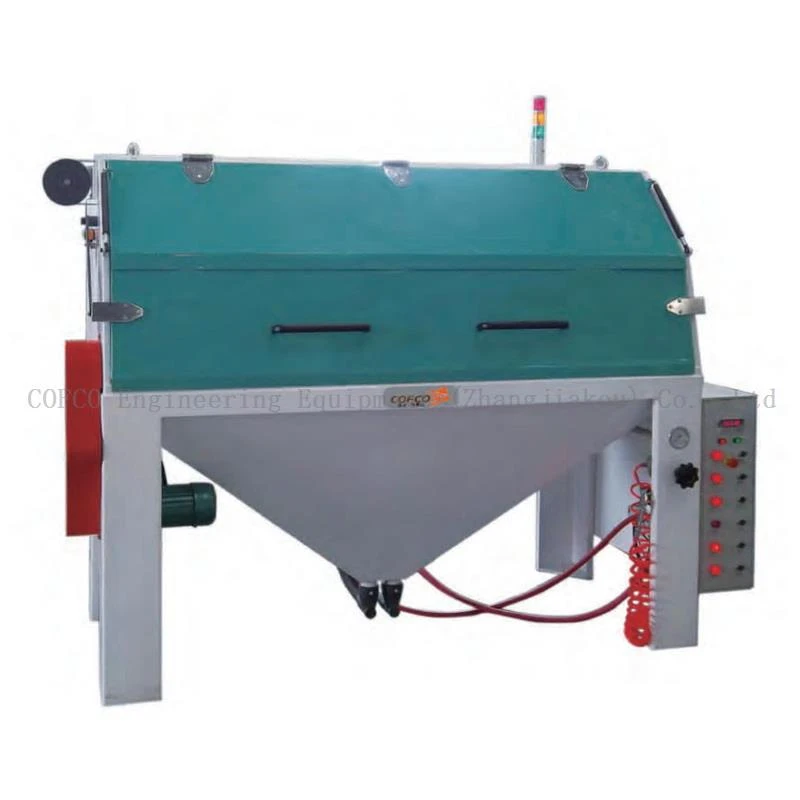
Now, if you’re tired of generic mixers that don’t do what you need, hit us up to chat through your requirements. We can walk you through the options, answer any questions, and even run a quick test with your materials to show you how a custom unit would work for you. No sales pitch, just real talk about what your operation needs.
Flour Automatic Packing Machine References:
- American Feed Industry Association. (2022). Custom Feed Mixing Equipment: Meeting Diverse Production Needs.
- Journal of Applied Poultry Research. (2021). Effects of Mixer Customization on Feed Uniformity and Broiler Performance.
- National Agricultural Machinery Manufacturers Association. (2023). Customization in Agricultural Mixing Equipment: Best Practices and Cost-Benefit Analysis.
- Aquaculture Engineering. (2022). Design Modifications for Feed Mixers Handling Delicate Micro-Ingredients for Aquafeeds.
- Organic Trade Association. (2021). Sanitation and Contamination Control in Custom Feed Processing Equipment.
COFCO Engineering Equipment (Zhangjiakou) Co., Ltd.
As one of the most professional feed mixing equipment manufacturers and suppliers in China, we also support customized service. Please feel free to wholesale advanced feed mixing equipment for sale here from our factory. Quality products and reasonable price are available.
Address: No.4 ZhongLiang Street, high-tech industrial development zone, Zhangjiakou, Hebei, PRC
E-mail: mayihui@cofco.com
WebSite: https://www.ceeflourmill.com/
