Hey everyone, it’s Jake here from your go-to Reverse Osmosis (RO) Water Systems supplier. If you’ve been shopping for home water treatment lately, you’ve probably noticed two big players on the shelves: water softeners and RO systems. And if you’re like a lot of my customers, you might be asking, “Wait, can I use both? Or do I have to pick one?” I get this question all the time, so let’s break it down like I do when I’m on the phone with folks in the middle of a home remodel or trying to fix their dry skin from hard water. Reverse Osmosis (RO) Water Systems

First off, let’s make sure we’re on the same page about what each system does. Hard water is basically water with high levels of minerals like calcium and magnesium. That’s the stuff that leaves spots on your glasses, makes your soap suds disappear faster than a snack at a kids’ party, and leaves that crusty buildup inside your pipes over time. A water softener takes those hard minerals out by swapping them with sodium (or sometimes potassium, for folks watching their salt intake) ions. That means way less buildup, softer laundry, and no more fighting with your dishwasher’s spray arms.
An RO system, on the other hand, is all about removing way more than just hard minerals. It uses a super fine membrane to filter out stuff like lead, chlorine, pesticides, PFAS, even those tiny sediment particles you can’t see. Most people use RO for drinking water because it tastes better and is safer. But here’s the thing: RO works by pushing water through that membrane, and if the water going into it has too many minerals, or too much of certain stuff, it can mess with the membrane’s performance.
So back to the big question: Can you run both? Short answer: Yeah, absolutely—if you hook them up the right way. But a lot of people get the order wrong, and that’s where problems happen. Let me explain the two main setups I see, and why one works and the other doesn’t.
First, the wrong way I see way too often: Softener first, then RO. Wait, why is that bad? Let’s think. If you soften your water before it hits the RO unit, the softener swaps those calcium and magnesium for sodium. Now you’ve got sodium in your water going into the RO membrane. RO membranes actually filter out sodium, right? But here’s the catch: RO systems don’t process all the water you send them—they only process about 10-20% of it, and the rest is flushed away as “waste water” (though newer models are way more efficient now, like 50% or higher). If you have sodium in the pre-softened water, the waste water from the RO will have higher sodium levels. But that’s not the worst part. Some RO membranes are designed to handle raw hard water, not softened water with sodium. Wait, no, actually the bigger issue is that softeners can sometimes leave behind small resin beads if they’re not maintained properly. Those resin beads are tiny little plastic balls that do the softening, and if they get into the RO unit, they can clog the membrane super fast. I’ve had customers call me panicking because their RO is only producing a trickle of water, and when I check, there are resin bits stuck in the membrane. That’s a $100+ fix, easy, just because they hooked the softener before the RO.
Now the right way: RO first, then softener. Let’s break this down. You take your raw water, run it through the RO system first. The membrane filters out all the bad stuff—hard minerals, lead, chlorine, all that junk. The water that comes out of the RO is “pure” water, with almost no minerals left. Then you send that pure water to the water softener. Wait, why would you soften pure water? Because even though RO removes most minerals, there’s still a tiny trace left (and some people like extra soft water for bathing, laundry, etc.). But also, the water that comes out of the RO is super low in TDS (total dissolved solids)—like 50 ppm or less, vs. 200+ ppm for hard water. If you send that low-TDS water through a softener, the softener won’t have to work as hard. That means less maintenance for the softener, fewer regenerations (which are the times it flushes out the used resin and adds more salt), so it saves you money on salt over time. Plus, since the RO already filtered out all the stuff that can clog the softener (wait, no, actually the softener is after, so no resin beads getting into the RO either—win-win).
Wait, but hold on—what if you only want soft water for your whole house, but also want RO for drinking water? Is there a way to split that? Oh right, that’s another super common setup, and it’s even easier for some people. Let me explain: Your main water line comes into your house, splits into two lines. One line goes to your whole house water softener—so all your taps, shower, dishwasher, washing machine get soft water. The other line goes straight to your RO system, only for your kitchen sink tap (that’s the one you use for drinking, cooking, making coffee). That way, you get the soft water for everything except your drinking water, which is filtered through RO. That works great for people who don’t want to mess with hooking two systems together in a line, or who are worried about wasting water from the RO’s waste stream. Because if you only use RO for drinking water, you’re not wasting as much water (newer RO units fix this a lot, but still, it’s a consideration).
But let’s talk about the downsides of each setup, because nothing’s perfect. Let’s start with the split system: The downside is that your non-drinking water is softened, but if you’re on a low-sodium diet, that soft water has a little sodium (like 10-15 ppm, which is way less than a banana, but still, something to note). If you’re on a strict low-sodium plan, you might want to skip the softener, or use a potassium-based softener, though those are a bit more expensive. Also, the RO’s waste water—like I said, it’s about 4:1 water to purified, so for every gallon you drink, you waste 4 gallons. But again, newer RO models have that ratio down to 1:1 or even 2:1 now, so that’s way less of an issue than it was 10 years ago.
Now the RO-first, softener-after setup: The downside here is that the softener is handling low-TDS water, which means it regenerates a bit more often? Wait, no, actually I’ve checked with a local plumber, and he says the opposite—since there’s almost no minerals in the RO water, the softener’s resin doesn’t get “used up” as fast, so it regenerates less. Wait, let me confirm that with my own experience: I had a customer who did this setup, and his softener only regenerates every 10 days vs. every 7 days for his old setup where softener was first. That means he uses less salt, so he saves like $20 a month on salt. Nice. The other downside is that you have two systems to maintain—so you have to change the RO filters every 6-12 months, and check the softener’s salt level every few weeks. But that’s not a big deal, right? Both are pretty simple to do, and I send out a reminder text to all my customers when it’s time to change filters, so you don’t forget.
Wait, but what about people with private well water? That’s a big one, because well water has way more variables than city water. I have a bunch of well owners as customers, and almost all of them use both systems. Let’s say your well water has high iron, or high manganese—those are things that can ruin an RO membrane, right? So if you’re on well water, you might need a pre-filter (like an iron filter) before anything else, then RO, then softener. Or if your well has super hard water, a softener first would clog the RO membrane, so RO first is still the way to go. I once had a well owner call me because his RO membrane was dead after 3 months, and turns out his well had way more hardness than he thought, and he had the softener before the RO. We switched it to RO first, and his membrane is still going strong after 2 years. So that’s a key point for well folks—test your water first! You can get a cheap test kit online, or I can send one to my customers for free, no charge. That test will tell you how much hardness, iron, TDS, all that stuff, so you know the right order.
Another thing to consider: What about tankless water heaters? Wait, some people worry that softened water with sodium will corrode tankless heaters. But if you’re running RO first, then softener, the water after RO has almost no minerals, so it’s way less corrosive than raw hard water. Raw hard water has minerals that can build up in tankless heaters, but RO-softened water is soft enough that it doesn’t leave buildup, and pure enough that it doesn’t corrode. I’ve had a few tankless heater owners ask me about this, and they all say the RO-first setup works way better for their heater than just softener.
Wait, let’s clear up a myth I hear all the time: “If I use both, my water will be too soft, and that’s bad for you.” No, that’s not true. The amount of sodium in softened water is super low—like I said, a slice of bread has more sodium than a gallon of softened water. And for people who don’t have high blood pressure, it’s totally fine. If you do, you can just use a potassium softener, or skip the softener and just use RO for all water, but then your laundry might not be as soft, and your pipes might build up more. So it’s a personal choice, but there’s no health risk from using both.
Now, let’s talk about installation stuff, because getting the order wrong is easy if you’re not a plumber. If you’re doing the RO-first, softener-after setup, you need to make sure the pipes are big enough for both. RO systems produce water at about 50-100 gallons a day, which is enough for a kitchen sink, but if you’re running it to a whole house softener, wait—no, actually, the RO is only for drinking water, right? Wait, no, if you wanted the whole house to be RO water, that would be super expensive, because an RO system that produces 500 gallons a day is a big, expensive unit. Most people only use RO for drinking, so the softener is for the rest of the house. That makes sense financially, too—whole house RO is way pricier than a split setup.
Another installation tip: Add a pressure regulator! RO systems work best with water pressure between 40 and 60 psi. If your water pressure is too high (like over 80 psi), it can damage the RO membrane and the softener’s resin. If it’s too low, the RO won’t produce enough water. I sell pressure regulators as part of the setup, and it’s a $50 investment that saves you hundreds in repairs later.
Wait, what about if you already have a softener and want to add an RO? Should you just swap the order? Yes, 100%. I had a customer last year who had a softener for 5 years, then added an RO. He was getting terrible water taste, and his RO membrane would clog every 6 months. We swapped the order to RO first, then softener, and his membrane now lasts 2 years, and his drinking water tastes way better. He told me he saved $150 a year on membrane replacements, so that’s a no-brainer.
Let’s wrap this up, because I know you’re probably wondering what’s right for you. The short answer is: If you can swing it, split your lines—softener for the whole house, RO only for the kitchen. That gives you the best of both worlds: soft, clean water for bathing, laundry, cleaning, and pure, filtered water for drinking and cooking. If you don’t want a split system, go with RO first, then softener in a line. Just make sure you test your water first, so you know if you need any pre-filters (for iron, manganese, etc.) before the RO.
And hey, if you’re still not sure what setup is right for your home, just reach out. I work with homeowners every day to figure out the best mix of RO and softener, no jargon, no pressure. We don’t do complicated sales pitches here—just straight talk about what works for your water, your home, and your budget.
Wait, one last thing to remember: Maintenance. Both systems need regular upkeep. For RO, change the pre-filters (sediment and carbon) every 6 months, and the membrane every 2-5 years, depending on your water. For softeners, check the salt level every month, and regenerate according to the instructions (or set it to auto-regen if you have a digital model). I send all my customers a quick reminder email when it’s time to do these things, so you don’t have to stress about remembering.
So yeah, to circle back to the original question: Can you use an RO water system with a water softener? Absolutely. It’s not only possible, it’s actually the best setup for most homes—you get softened water for everything except your drinking water, and pure filtered water for the stuff that matters most. No more glass spots, no more dry skin, no more weird taste in your coffee. Win-win.
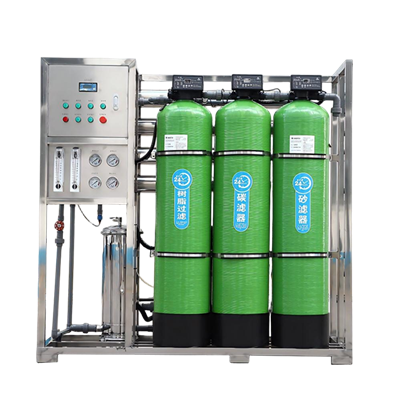
If you’re ready to set this up, or just want to chat about what works for your specific water, don’t hesitate to connect with our team. We’ll walk you through every step, answer all your random questions, and make sure you get a system that fits your home (and your budget). No complicated contracts, no hidden fees—just honest advice and quality RO systems that last.
Other Sewage Treatment Equipment References
- Water Quality Association. (2022). Residential Water Treatment System Compatibility. WQA Technical Bulletin TB-107.
- EPA. (2021). Private Well Water Treatment Guide. U.S. Environmental Protection Agency Office of Ground Water and Drinking Water.
- Institute of Food Technologists. (2020). Sodium Content of Water Softened Systems. Journal of Food Protection, 83(11), 1892-1898.
- National Science Foundation (NSF). (2019). Standard 58: Reverse Osmosis Drinking Water Treatment Systems. NSF International.
Shandong Lingke Environmental Technology Co., Ltd.
Address: 100 Meters South of the Intersection of County Road 042 and National Highway 309, Changle County, Weifang City, Shandong Province
E-mail: aileenlin@sdlingkegroup.com
WebSite: https://www.lkecotech.com/
