If you’ve ever unboxed a fresh bag of coffee beans, a bag of frozen veggies, or a case of snack bars, you’ve probably encountered a tiny, unassuming polymer clip holding the bag shut. Most people glance at it, toss it aside once the packaging’s open, and never give it a second thought. But as someone who’s spent the last eight years supplying these clips to food manufacturers, retail brands, and packaging suppliers across North America, I can tell you this little component does way more than just “keep a bag closed.” Its purpose is rooted in science, efficiency, and a commitment to reducing waste that too often gets lost in the noise of big-picture packaging design. Let’s break down what polymer clips actually do, why they matter, and why choosing the right one isn’t a trivial detail—it’s a make-or-break part of a product’s lifecycle. Polymer Clip

First, let’s start with the basics: what is a polymer clip, and how does it work? Unlike metal staples or twist ties, which have their own flaws, polymer clips are molded from food-grade thermoplastics—think polyethylene (PE), polypropylene (PP), or sometimes recycled polyethylene terephthalate (rPET) these days. The design is simple: a curved, spring-loaded mechanism that clamps onto the folded edge of a flexible packaging bag, creating an airtight (or at least moisture-resistant) seal. But the science behind that seal is where the purpose gets interesting.
For food manufacturers, the biggest pain point with flexible packaging is product degradation. Take fresh pasta, for example. Unsealed, a bag of pasta will dry out within days, turning brittle and stale. Even worse, exposed to moisture or oxygen, mold can start to grow, leading to product waste—and that’s a cost no brand wants to absorb. Polymer clips solve this by creating a repeatable seal that far outperforms a twist tie or a crumpled piece of tape. Twist ties, for instance, can slip loose, especially if a bag is handled roughly on a retail shelf. Tape loses adhesion in humid environments, which are common in grocery stores in the Southeast U.S. or parts of Canada. A properly engineered polymer clip, though, has just the right amount of tension: tight enough to stay closed through shipping, storage, and repeated opening by a consumer, but not so tight that it damages the bag’s edge when clipped on. That balance is a direct result of material science—we test each clip’s tensile strength to make sure it doesn’t break when pulled, and its resistance to temperature changes, so it doesn’t warp in a hot delivery truck or a cold freezer.
Another core purpose of polymer clips is operational efficiency for brands. When a manufacturer is packaging 10,000 units an hour, every second saved on the line adds up. Polymer clips are easy to automate: they’re compatible with standard clipping machines that can load and apply them in a fraction of the time it takes to apply twist ties manually or even seal bags with heat. I’ve had clients tell me switching to our clips cut their packaging line time by 12% in the first month alone—translating to thousands of dollars in labor costs saved per month. They also reduce errors: twist ties can get tangled in machinery, causing downtime, while polymer clips are uniform in size and shape, so they feed smoothly through automated equipment. For small-batch producers, too, our clips work with manual clippers, so even a craft bakery packaging its own sourdough buns can use them without investing in expensive gear.
Then there’s the consumer experience, which is a big part of what polymer clips are designed to do. Let’s be honest: how many times have you opened a bag of chips, eaten half, and then struggled to reseal it? Twist ties are often too flimsy to hold a full bag closed, so you end up using a rubber band, a paperclip, or even shoving the bag into a cereal box. Polymer clips solve that frustration. A consumer can open the bag, use the clip to reseal it tight, and tuck it into a pantry shelf without worrying about it coming undone. That not only keeps the product fresh longer—so a bag of chips stays crispy instead of going stale a week later—but it also makes the consumer feel like the brand thought about their needs, not just the cost of packaging. We’ve done focus groups with our clients’ customers, and the number one comment about our clips is that they “actually work” for resealing. That kind of small, positive interaction builds brand loyalty, which is priceless.
Now, let’s talk about sustainability—something that’s top of mind for every brand right now, and where polymer clips have a huge purpose. A lot of people assume plastic packaging is inherently bad, but the truth is, a well-sealed bag reduces overall product waste. The Food and Agriculture Organization estimates that 1.3 billion tons of food is wasted every year globally, and a big chunk of that is because packaging fails to protect it. A polymer clip that keeps a bag sealed for an extra week means a consumer doesn’t throw out half a bag of cereal or nuts, cutting down on food waste. But beyond that, modern polymer clips are designed to be recyclable, too. We switched 70% of our product line to rPET clips three years ago, and they’re compatible with most curbside recycling programs—unlike some metal clips, which can damage recycling equipment and often get sorted out. We also work with brands to design clips that are the smallest possible size that still works, reducing the amount of plastic used per clip. For a brand that ships 50 million units a year, that adds up to millions of pounds of plastic kept out of landfills and less product going to waste.
Of course, not all polymer clips are created equal, and that’s where our role as a supplier comes in. Some cheap, mass-produced clips are made from low-grade plastic that breaks easily or isn’t food-safe, which can lead to brand damage if a clip snaps in the store or contaminates a product. We test every batch of our clips against FDA food safety standards and EU regulations, because a clip can’t leach chemicals into food or become a choking hazard. We also work with brands to tailor clips to their specific products: a clip for frozen seafood needs to be resistant to cold temperatures, while a clip for coffee needs to create a better barrier against oxygen. Last year, a craft coffee roaster came to us because their old twist ties were letting air into the bags, making their beans go stale in two weeks instead of four. We engineered a clip with a slightly thicker rubberized edge that created a tighter seal, and now their shelf life is back to four weeks, reducing their product waste by 18%. That’s the kind of impact a good polymer clip can have.
I’ve been in this industry long enough to hear all the questions: “Can’t we just use a different closure?” “Is the cost difference really worth it?” Let me address those. Yes, there are alternatives, but none of them check all the boxes a polymer clip does. Heat-sealed closures, for example, create a very tight seal, but they’re not reusable—once you heat-seal a bag, you can’t open and close it again without special equipment. That’s a big problem for consumers, who want to use a bag multiple times. Paper clips or staple closures aren’t moisture-resistant, so they’re not good for frozen or humid products. And as I mentioned earlier, automation: no other closure is as easy to integrate into a high-speed packaging line as a polymer clip. As for cost, our clips are competitively priced, and the savings from reduced product waste, lower labor costs, and fewer line errors almost always offset the small difference in price compared to twist ties or other closures.
At the end of the day, the purpose of a polymer clip isn’t obvious because it’s designed to be unobtrusive. It’s a small part of the packaging system, but it’s the part that keeps food fresh, makes packaging lines run smoothly, and makes the consumer’s life a little easier. As a supplier, our job isn’t just to sell clips—it’s to help brands understand that this tiny component is a critical part of their product’s success. Whether you’re a small brand just getting started or a large corporation looking to reduce waste and improve efficiency, we have the expertise to design and supply the right polymer clip for your needs.
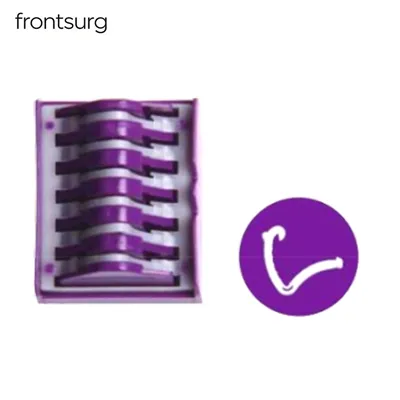
If you’re looking to upgrade your packaging closures, test a new clip for your product line, or just have questions about how polymer clips can benefit your operations, I’d be happy to connect and chat through your needs. Don’t hesitate to reach out to start a conversation about how we can support your business.
Laparoscopic Bipolar Forceps References
- Food and Agriculture Organization. (2019). Global Food Losses and Waste: Extent, Causes and Prevention.
- FDA. (2022). Food Contact Materials: Thermoplastics.
- Packaging Digest. (2021). The Role of Closures in Flexible Packaging Efficiency.
- Ellen MacArthur Foundation. (2020). New Plastics Economy Global Commitment Progress Report.
- Journal of Food Science. (2020). Impact of Packaging Closures on Shelf Life of Dry Grocery Products.
Frontmed (Hangzhou) Trading Co., Ltd.
Frontmed (Hangzhou) Trading Co., Ltd. is one of the most experienced polymer clip manufacturers and suppliers in China, also supports custom service. Please rest assured to wholesale high quality polymer clip made in China here from our factory. Contact us for more details.
Address: Room 406, Building 6, No.1688 Chunjiang East Rd, Tonglu, 311500, Hangzhou
E-mail: alex@frontsurg.com
WebSite: https://www.frontsurg.com/
