If you’re in the market for exterior wall fiberglass mesh, you already know how crucial this stuff is—wait, no, let me tell you, it’s non-negotiable for long-lasting exterior walls. I’ve been supplying these meshes for over 12 years, and I’ve seen so many contractors (even some that have been in the game longer than me) pick the wrong one, only to end up redoing stucco or EIFS (Exterior Insulation and Finish System) in 2 years instead of 10. The biggest mistake? Skipping the alkaline-resistant part. Regular fiberglass mesh falls apart the second it hits concrete, stucco, or mortar—those materials are super alkaline, and they eat through standard fiberglass fast. So today, I’m breaking down exactly how to pick the right one, no fluff, no jargon, just what I’ve learned from helping hundreds of builders and big box stores. Exterior Wall Fiberglass Mesh
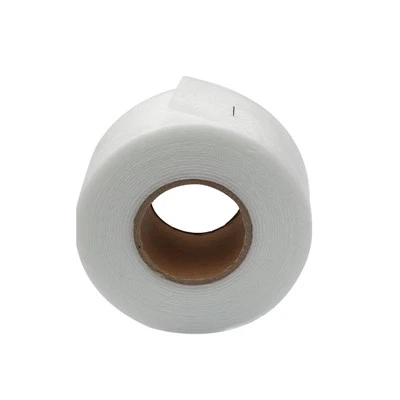
First, let’s cut through the noise: not all fiberglass mesh is “alkaline-resistant.” A lot of suppliers slap that label on regular mesh and charge 20% more—don’t fall for that. The real alkaline-resistant stuff uses a coating, usually acrylic, that bonds with the fiberglass threads to block the alkalinity. But here’s the catch: not all acrylic coatings are equal. I’ve tested mesh from 3 different suppliers that said alkaline-resistant, and only 2 of them passed my 90-day soak test (I soak them in a pH 13 solution, which is exactly what fresh mortar or stucco is, to simulate real-world conditions). The one that failed? The threads were fraying after 45 days. So that’s my first tip: ask for the coating details. If a supplier can’t tell you it’s a modified acrylic coating made specifically for alkali exposure, walk away. No exceptions.
Next up, weight counts, but not just any weight—wait, no, let’s clarify. A lot of people think higher grams per square meter (GSM) means better, but that’s only true if the coating is applied evenly. I’ve seen a 160 GSM mesh with a thin coating that’s worse than a 145 GSM mesh with a thick, full acrylic coat. Here’s what you need to look for: for standard residential walls (stucco, brick veneer, EIFS stick-built), stick to 145 to 160 GSM. If you’re doing a commercial building, or a wall that’s in a super harsh environment—like coastal areas with salt air, or places that get extreme temperature swings (think Arizona or Minnesota), go for 160 to 180 GSM. Why? More threads mean more coverage, and the coating has more surface area to bond. But again, check the coating: if the 180 GSM mesh has a patchy coat, it’s not going to hold. I once had a customer from Florida buy a cheap 180 GSM mesh, and within a year, the salt had seeped through the thin coating and eroded the threads. He ended up having to rip it all out and use the mesh we supply, which is 160 GSM with a heavy modified acrylic coat—saved him a ton of money in the long run.
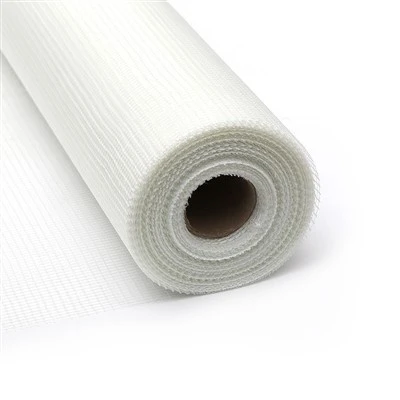
Then there’s weave type. This is another area where people mess up. The two main types are plain weave and warp-knit. Wait, let’s keep it simple: plain weave is when each thread goes over and under the next one, like a regular woven shirt. Warp-knit is when the threads run lengthwise and are stitched together in loops, so it’s more flexible. For exterior walls, warp-knit is way better. Why? Because plain weave has gaps, and when you’re applying stucco or mortar, the mix can seep through too much, leading to uneven bonding. Warp-knit has a tighter, more uniform structure that lets the mix adhere evenly, and it doesn’t stretch when you’re laying it down. I’ve seen guys try to use plain weave mesh for a large commercial job, and when they pulled it tight to fit around window frames, it stretched, creating loose spots that cracked a month later. Trust me, warp-knit is the way to go. Just make sure the warp threads are coated too—some cheap warp-knit mesh only coats the weft threads, which means the lengthwise threads (the ones that take the most tension) will erode first.
Now, let’s talk about durability testing, because this is where the lies get exposed. Any reputable supplier will have test data from a third-party lab, right? Wait, but don’t just take the lab’s word for it. I always suggest asking for the ASTM C1579 test result. That’s the standard test for evaluating alkaline-resistant fiberglass mesh for exterior wall applications. The test exposes the mesh to a highly alkaline solution for 28 days, then measures the tensile strength retention. A good mesh should retain at least 75% of its original tensile strength after that test. If it’s less than 70%, it’s garbage. I’ve had a supplier send me a test sheet that said 82% retention, but when I did my own 90-day test, it was only 68%. Turns out, the lab test was for a different batch. So always do a quick soak test yourself: cut a 6×6 inch piece, dip it in a bucket of water with a little bit of baking soda (to make it alkaline, like pH 12-13), wait 90 days, then pull on the threads. If they snap easily, or feel fuzzy, skip that mesh. It’s not going to last.
Wait, let’s not forget about UV resistance. A lot of people overlook this, but exterior walls are exposed to sunlight 24/7, and UV rays break down the acrylic coating over time. So even if the mesh is alkaline-resistant, if it’s not UV-resistant, the coating will peel off in 3-5 years, leaving the threads exposed to the elements. That’s a huge mistake. I only supply meshes that have UV-stabilized acrylic coatings. How do you check? Ask the supplier if the mesh is tested for UV resistance, usually per ASTM D4329, which is the standard for artificial weathering. A good mesh will retain at least 80% of its strength after 500 hours of UV exposure. If a supplier can’t confirm that, their mesh is going to fail when the sun hits it. I had a customer in Texas who used a mesh that said “alkaline-resistant” but didn’t have UV stabilization. Within 4 years, the coating was gone, and the threads were brittle. He ended up paying twice as much to replace the mesh and re-stucco the wall. So UV resistance is non-negotiable, don’t skip that.
Now, let’s cover some common red flags to watch out for. First, mesh that’s too cheap. If you’re paying less than $0.10 per square foot, it’s almost definitely not the right stuff. Good alkaline-resistant mesh with a modified acrylic coat costs around $0.12 to $0.18 per square foot. If it’s cheaper, the coating is thin, or it’s not even alkaline-resistant. Second, mesh that’s messy. If when you unroll it, threads are sticking out, or the coating is flaking off, that’s a sign of poor manufacturing. A good mesh will have smooth, even threads, no flaking coating, and straight edges. Third, suppliers that can’t answer your questions. If they don’t know the GSM, the coating type, the test standards, or the UV resistance, they’re just reselling junk. I make sure every customer I talk to knows exactly what’s in the mesh I supply, because I stand behind it.
Wait, let’s also talk about size. Most exterior wall mesh comes in 36 inch wide rolls, which is standard, but some suppliers offer 48 inch rolls. Is that better? It depends on the job. For large, open walls, 48 inch rolls mean fewer seams, which is great because seams are weak points. But if you’re working around windows, doors, or corners, 36 inch rolls are easier to handle. But the size doesn’t affect the quality, as long as the mesh meets the standards we talked about. Just make sure the roll is wound tight, no gaps between layers, because loose rolls can get tangled and damaged before you even use them.
Let me wrap this up with a real example, because that’s what helps. Last year, I had a contractor from Atlanta reach out to me. He’d been buying mesh from a big online supplier, paying $0.08 per square foot. He installed it on a 10,000 square foot exterior wall, and within 18 months, the stucco was cracking in multiple spots. When he took a look, the fiberglass threads were all frayed and brittle—turns out, the “alkaline-resistant” mesh was just regular mesh with a thin acrylic coat that didn’t hold up. He switched to the mesh I supply: 160 GSM, modified acrylic coating, warp-knit, UV-stabilized, passed the ASTM C1579 test. He installed it on the same wall, and after a year and a half, it’s still holding strong. He told me it saved him $15,000 in rework costs. That’s the difference between picking the right mesh and the wrong one.
So to recap, here’s your quick checklist: 1. Confirm it has a modified acrylic coating (not regular acrylic, not just a wax coat) designed for alkali exposure. 2. Pick 145-160 GSM for residential, 160-180 GSM for harsh environments (coastal, extreme temps, commercial). 3. Go with warp-knit weave for even bonding and no stretching. 4. Ask for ASTM C1579 test data, aim for 75%+ tensile strength retention after 28 days. 5. Make sure it has UV stabilization (ASTM D4329, 80%+ strength after 500 hours). 6. Avoid anything under $0.10 per square foot, and skip suppliers that can’t answer these questions.
At the end of the day, exterior wall fiberglass mesh is small, but it’s the backbone of your wall. Pick the wrong one, and you’re looking at expensive rework in a few years. Pick the right one, and your wall will last a decade or more without issues. If you’re not sure which mesh is right for your project, or you want to test the quality, feel free to reach out. We can send you samples, share our test data, and help you figure out exactly what you need for your job. No pressure, no sales pitch, just honest advice from someone who’s been in this for years.
Let me know if you have any other questions, I’m always here to help.
Interior Wall Fiberglass Mesh References:
- ASTM International. (2020). Standard Test Method for Evaluating Alkali-Resistant Glass Fiber Mesh for Use in Exterior Wall Systems. ASTM C1579-20.
- ASTM International. (2021). Standard Practice for Accelerated Outdoor Exposure Testing of Nonmetallic Materials. ASTM D4329-21.
- National Stucco and Plasterers Association. (2022). Guide to Fiberglass Mesh for Exterior Wall Systems. NSPA Publication 107.
Danyang Yonggu Building Materials Co., Ltd.
As one of the most professional exterior wall fiberglass mesh manufacturers and suppliers in China, we have world-leading production equipment and strong manufacturing capabilities. Please feel free to wholesale customized exterior wall fiberglass mesh made in China here from our factory. For price consultation, contact us.
Address: Danyang City, Jiangsu Province, P.R. China
E-mail: sales02@cnyongu.com
WebSite: https://www.ygfiberglasses.com/
