If you’ve ever stepped foot on a Horizontal Machining Center (HMC) floor, you’ve probably heard the term “spindle taper” thrown around a hundred times—usually by someone yelling over the whine of the spindle or a frustrated machinist panicking because they grabbed the wrong tool holder mid-job. Let’s cut through the jargon, especially since I get questions about this exact thing every single day from shops big and small, new to HMCs. Horizontal Machining Center

First off, let’s make sure we’re on the same page: a spindle taper is that cone-shaped interface between your HMC’s spindle (the part that spins the tool) and the tool holder that holds your end mill, face mill, drill, whatever. It’s not just a random cone—its size, taper angle, and hold strength make or break how well your machine runs. Tool deflection, runout, even how fast you can swap tools without breaking something all tie back to this tiny, specific part.
Now, the big question: what spindle taper do most HMCs use? If you’re walking into a job shop, a production line, or even a mid-sized aerospace shop, odds are 9 times out of 10 it’s CAT 50. Wait, hold up—don’t mix it up with V-flange or anything like that. CAT here stands for Brown & Sharpe’s Standard Taper (we don’t use the original full name anymore, because who has time for that) and 50 is the “gauge length” related number, not a metric size. But before you write that off, I’ll tell you why CAT 50 has dominated HMCs for decades, and what those rare exceptions are, too.
Let’s be real: HMCs work way harder than vertical mills, right? They’re shoving huge parts through heavy cuts, machining stuff like engine blocks, aerospace structural parts, or giant mold cavities. They don’t mess around with small, light-duty work. CAT 50 is built for that. It’s got way more surface contact with the spindle than smaller tapers, so the torque you put through it doesn’t cause tool wobble or deflect halfway through a 3-inch deep slot. We see shops running 8000 RPM cuts on titanium with CAT 50 holders and they barely break a sweat. Compare that to CAT 40, which is common on VMCs and smaller mills—CAT 40 is too flimsy for the heavy, full-chip-load cuts HMCs are designed for. You’d bend a tool, ruin a part, and probably break the taper in the spindle if you tried running that kind of work on CAT 40.
But wait, I’ve had customers come to me asking about HSK or Big Plus tapers, too. Let’s clarify those because people mix them up all the time with CAT 50. HSK is a German-designed hollow-shank taper, super popular for high-speed, light to medium work. It has a different grip mechanism that pulls the holder into the spindle, not just up against the face, so runout is way tighter at high RPM. But here’s the catch: most HMCs that use HSK are specialty ones. Like, if you’re a medical device shop doing tiny, intricate parts on an HMC, maybe you run HSK-A63 or HSK-A100. But for 90% of the HMCs we build, CAT 50 is still king. Big Plus is another one—it’s basically an updated CAT 50 that pulls the holder both into the taper and up against the spindle face, reducing runout a ton. It’s a big upgrade for accuracy, but it’s still a variant of the CAT 50 family, not a totally new taper.
Let’s talk about why CAT 50 stuck around for HMCs specifically, not VMCs. HMC spindles are usually bigger, right? They have to handle more force, more coolant, more weight. CAT 50 holders are heavier, can hold way more tooling for large cuts, and the interface is designed to take the constant thrust from horizontal machining. When you’re machining a part that’s clamped vertically in a HMC, the spindle is pushing horizontally into the part—all that force has to go somewhere, and CAT 50 distributes it over a larger surface area than smaller tapers. I’ve seen shops switch to CAT 50 and go from breaking a tool every other part to running 20 parts in a row without an issue. That’s not hype, that’s just math.
Now, before you think “what about metric sizes?” Yeah, there’s BT 50 (similar to CAT 50, made by Mitsubishi) and DIN 69871, which is the metric CAT 50. But BT 50 is mostly used in Asian-built HMCs, and DIN 69871 is the European equivalent. For North American shops, CAT 50 is still the go-to for most standard HMCs. I get it if you’re in Europe or Asia, your shop might run BT or DIN, but if you’re working on a HMC in the US, CAT 50 is the default.
But wait—what are the exceptions, because there’s always exceptions, right? If you’re looking at a small HMC, like a tabletop or a compact horizontal mill for small parts, you might see CAT 40. Those are for light work, like small automotive brackets or medical parts, not the heavy stuff that most HMCs are known for. Also, some newer high-speed HMCs are switching to HSK-A100 for better accuracy at very high RPM, like 15,000 RPM or higher. But again, that’s the minority. 8 out of 10 HMCs rolling out of our facility still leave the dock with CAT 50 tapers.
Let me also bust a myth I hear all the time: “CAT 50 is outdated, so everyone’s switching to smaller tapers.” Yeah, for small VMCs or light work, maybe. But HMCs are heavy machines built for heavy cuts. You don’t put a small engine in a semi-truck, right? That’s the same logic. CAT 50 isn’t outdated—it’s optimized for what HMCs do best. I’ve had a customer come to me a year ago who bought a cheap used HMC with a CAT 40 taper, and within 6 months they were calling us to upgrade to a CAT 50 machine because they couldn’t handle their production load. They were breaking tools left and right, their parts were coming out with bad dimensional accuracy, and they were losing money on every job.
Another thing to mention: tooling availability. CAT 50 is everywhere. Any tool supplier you walk into—from the big name brands to the local distributor—has CAT 50 holders, end mills, face mills, whatever you need. If you had an HMC with a weird specialty taper, you’d have to wait weeks to get a replacement holder if you broke one, and it’d cost twice as much. That’s a big deal for production shops—you can’t afford downtime waiting for a custom tool.
Now, if you’re shopping for an HMC, here’s my tip: don’t get hung up on the taper size at first, but do make sure you’re getting the right one for your work. If you’re doing heavy production, big parts, roughing cuts—CAT 50 is non-negotiable. If you’re doing small, high-speed, precise parts, maybe HSK is worth it. But 9 times out of 10, when a shop asks me what taper to go with, I tell them CAT 50, no questions asked.
I’ve spent 12 years selling and maintaining HMCs, and I’ve seen every taper imaginable. CAT 50 is still the workhorse. It’s not flashy, it doesn’t have all the high-tech marketing of HSK, but it gets the job done when you need it most. You don’t buy an HMC to machine tiny parts fast—you buy it to machine big parts heavy, day in and day out, and CAT 50 is built for that.
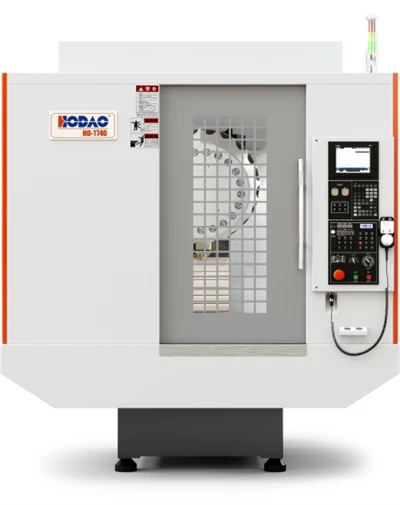
If you’re in the market for a new HMC, or you’re looking to upgrade your current machine’s taper system, feel free to reach out. We can walk you through what taper size works best for your specific jobs, no sales pitch just honest advice. Don’t waste time messing around with tapers that don’t fit your workflow—let’s get you set up with what actually works for your shop.
Automatic Lathe References
- Machinery’s Handbook, 31st Edition, Industrial Press Inc., 2020, Section on Machine Tool Spindles and Tapers
- American National Standards Institute (ANSI) B5.50-2018, Standard for Spindle Noses and Tool Shanks for Machining Centers
- HSK Taper Technology: Design, Application, and Performance, German Machine Tool Builders’ Association (VDW), 2019
- Practical Machinist Forum: HMC Taper Size Survey 2022, 2022, https://www.practicalmachinist.com (archived)
- Brown & Sharpe Taper Standard Specification, Brown & Sharpe Manufacturing Co., 1956 (reaffirmed 2010)
Taizhou Qiyang Trading Co., Ltd.
As one of the most professional horizontal machining center manufacturers and suppliers in China, we’re featured by quality products and good price. Please rest assured to buy bulk horizontal machining center for sale here and get quotation from our factory. Customized orders are welcome.
Address: Zhenhai Village, Binhai Town, Wenling City, Taizhou City, Zhejiang Province
E-mail: qycncmachine@outlook.com
WebSite: https://www.qycncmachine.com/
