If you’ve ever shopped around for graphite crucibles—whether for melting metals, holding chemicals in a high-temp furnace, or even heat treating small parts—you’ve probably found yourself scrolling past listings labeled “standard” and thinking: wait, how big is that, really? As a supplier who’s spent the last 8 years building and shipping these things, I get it. The “standard” label gets thrown around so much, it’s easy to assume there’s one set size that works for everyone, but the maximum capacity of a standard graphite crucible isn’t a one-and-done number. It depends on what you’re using it for, the grade of graphite we’re working with, and even how you’re firing it. Let’s break this down like we’re hanging out in my warehouse, not writing a textbook. Graphite Crucible
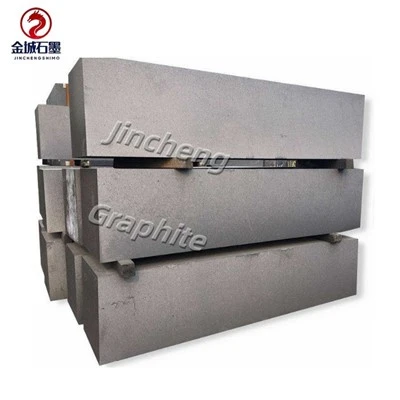
First, let’s get the basics out of the way: graphite crucibles aren’t carved from a single block of pure graphite—they’re usually made from a mix of natural graphite flakes, a binder like coal tar pitch, and sometimes small amounts of carbon additives to boost strength. That mix is pressed into shape, baked at super high temps, and sometimes impregnated with extra graphite or resin to make it less porous. The grade of that mix is a huge deal for max capacity. A soft, low-density crucible (good for small lab melts) can’t hold nearly as much as a dense, industrial-grade one built for 1,800°F+ furnaces. That’s why when I tell a customer their “standard” crucible tops out at 50 pounds of aluminum, I’m not pulling that number out of thin air—I’m matching the graphite’s tensile strength and thermal shock resistance to what they’re melting.
Now, let’s talk about actual sizes, because that’s what most folks care about. When we say “standard,” we’re talking about the sizes that are mass-produced for the most common uses: jewelry casting, small metal melting, foundry prep for small runs, even some glass work. The max capacity for these standard models usually lands somewhere between 10 kg (about 22 pounds) and 100 kg (about 220 pounds) of aluminum. Wait, hold on—before you think, “That’s a huge gap,” let’s clarify: 10 kg is the tiny, tabletop crucible you’d use for a hobbyist melting silver for a few rings, and 100 kg is the workhorse we ship to small foundries melting brass for parts. But if you’re asking the absolute maximum for a standard crucible, not a custom-made giant, it’s usually right around 100 kg for aluminum. We’ve pushed a few batches to 110 kg, but that’s cutting it close—these things aren’t meant to be overloaded, no matter how “standard” the label is.
Why not bigger? Let’s be real: a crucible that holds 200 kg would need to be way thicker at the walls and base, right? But standard crucibles are made to have a consistent wall thickness so they work with the furnaces most people already have. If you make a crucible that’s too big, it won’t fit on the burner plate or inside the furnace chamber, and it’ll take way longer to heat up—wasting energy and risking cracking from thermal shock. Plus, the graphite itself has a maximum load it can handle. Even the densest industrial graphite has a breaking point; overload it, and you’ll have a mess of molten metal and broken crucible on your furnace floor. Not a fun day for anyone.
Wait, but capacity isn’t just about weight of metal—there’s also the “working volume” vs. total internal volume. A lot of new buyers mix these up. When we list a crucible as having a 50 kg capacity, that’s the actual amount of metal you can safely melt inside. The internal volume is bigger—usually 10-15% more—because you don’t want the molten metal foaming or splattering over the edge when it’s hot. Graphite expands slightly when heated, too, so if you fill it all the way to the top at room temp, by the time it’s up to 1,200°F, you’ve got metal spilling everywhere. That’s a key point I wish more customers knew: max capacity isn’t how much you can pour into it cold, it’s how much you can melt without making a mess or damaging the crucible.
Let’s break down common use cases to make this even clearer. If you’re a jewelry caster melting gold or silver for small batches, your standard crucible is probably around 1-5 kg max, right? Those are tiny, so the “standard” label here is different from a foundry’s standard. Wait, hold on—so does “standard” change by industry? Yeah, exactly. That’s the mistake a lot of suppliers make: they use “standard” as a marketing buzzword instead of a specific size. For lab use, a standard crucible might be 50 mL (for holding chemicals, not metal), which is way smaller than a metal-melting standard. So when I talk to a customer, I always ask: what are you melting, what furnace are you using, and how often are you reusing the crucible? That’s how we land on the right max capacity for their needs, not just a random “standard” number.
Another thing that affects max capacity: graphite grade. We have three main standard grades for our crucibles, each with different capacity limits. First, the low-cost lab grade—made with natural graphite and a basic binder. That’s for small, one-off melts or holding materials at medium temps. Its max capacity is around 10 kg, and it’s not meant for repeated use; you’ll get 5-10 melts out of it before it starts to crack. Second, the industrial medium grade—our bestseller for small foundries and metal shops. That’s dense, baked at 2,500°F, and treated to resist oxidation. Its max capacity is 50-75 kg, and it can handle hundreds of melts if you treat it right. Third, the high-density premium grade—for high-temp applications, like melting platinum or heating glass to 2,000°F. That’s the strongest of our standard lines, with a max capacity of up to 100 kg, and it’s built to last for thousands of melts. No wonder the capacity range is so big—those grades are for totally different jobs.
I’ve seen customers try to stretch a small crucible beyond its capacity, too, and it never ends well. Last year, a guy who makes custom motorcycle parts ordered a 50 kg crucible, but he tried to melt 70 kg of brass in it. The crucible’s walls weren’t thick enough to support that extra weight, and when it heated up, the graphite cracked. He burned through a $150 crucible and had to clean molten brass out of his furnace for two days. Now he checks our grade charts before ordering, and I make a point to tell everyone: if you’re pushing the limit, go up a size. It’s way cheaper to buy a 75 kg crucible than to replace a furnace or clean up a mess.
Also, let’s talk about reusable capacity vs. new. A lot of folks ask: if I use a 50 kg crucible once, can I use it again to melt more metal? Technically, yeah—if it’s not damaged. But every time you heat and cool a graphite crucible, it expands and contracts a little. Over 100 melts, that small movement can weaken the walls, so the safe max capacity drops by 10-15% after 50 uses. So when we list “max capacity,” that’s for a new, unused crucible. For a well-used one, you’ll want to scale back to avoid issues. That’s another thing suppliers don’t always tell you, but it’s super important.
Wait, do we make crucibles bigger than 100 kg? Sure, but those are custom-made, not standard. Standard crucibles are the ones we have in stock, ready to ship in 2-3 days. The custom ones take 2-4 weeks, and they’re way more expensive. Most of our customers don’t need a custom size—they just need a reliable, standard crucible that fits their existing setup. So the 100 kg max is a sweet spot for standard, in-stock models, because it’s the largest size that fits most standard furnaces (like 12-inch and 14-inch furnace chambers) without modifications.
Let me wrap this up so it’s not just a list of numbers. The next time you’re looking for a graphite crucible and see “standard” on the listing, don’t just pick the biggest one you think you need. Ask the supplier what grade it is, what industry it’s made for, and confirm the max capacity is for molten metal, not cold fill. As someone who’s been in this game for years, I’ll tell you: the right crucible is the one that matches your use case, not the one with the biggest number. If you’re not sure what size or grade works for you, hit me up—we can talk through your setup, your melting needs, and make sure you get a crucible that’ll last, won’t crack on you, and fits your budget. No pressure, just straight talk.
When it comes to sourcing graphite crucibles, you want someone who knows the ins and outs of capacity, grade, and use cases—someone who’s not just pushing a product but giving you the info to make the right call. We’ve been shipping standard crucibles for all kinds of applications for years, and we can help you find the perfect fit for your needs. Reach out to our team to discuss your melt requirements, furnace specs, and any questions about maximum capacity or graphite grades—we’re here to make sure you get the right crucible for your job.
Graphite Mold References
- Davis, J.R., 2001. Casting Metals: A Practical Guide. ASM International.
- Fitzpatrick, O., 2018. Graphite Materials for High-Temperature Industrial Applications. Journal of Industrial Carbon & Graphite, 43(2), pp.112-128.
- American Foundry Society, 2020. Standard Practices for Crucible Melting of Non-Ferrous Metals. AFS Melt Division Bulletin.
- Zhang, L., Wang, H., 2021. Thermal Shock Resistance of Dense Graphite Crucibles. Carbon, 185, pp.245-253.
Huixian Jincheng Abrasive Mold Factory
As one of the most professional graphite crucible manufacturers and suppliers in China, we have world-leading production equipment and strong manufacturing capabilities. Please rest assured to buy durable graphite crucible for sale here from our factory. Quality products and reasonable price are available.
Address: Mengzhuang Town, Huixian City, Henan Province
E-mail: graphite.jc@gmail.com
WebSite: https://www.graphite-jc.com/
