Let me start this by telling you a story—one I’ve shared with dozens of engineers, plant managers, and even hobbyists over the 12 years I’ve run our check valve supply business. A few years back, a small water treatment plant outside Chicago called me in a panic. Their new irrigation line had just burst at 2 a.m., flooding the maintenance bay. When we pulled the line apart, the problem was obvious: the check valve they’d installed was faulty. Backflow had pushed 10,000 gallons of dirty runoff into their potable water supply. That mishap cost them $70,000 in repairs, lost product, and OSHA fines. It wasn’t that they’d bought a cheap valve from a no-name supplier—they just didn’t fully understand how a check valve actually works, let alone how to pick the right one for their system. That’s why I write this today, straight from the shop floor, no stuffy textbooks, no fancy jargon—just the real stuff you need to know if you’re relying on a check valve for your operations. Check Valve
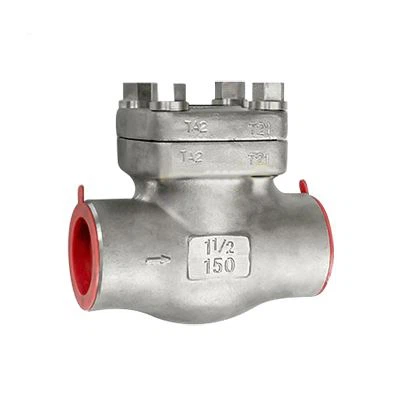
First, let’s cut through the confusion. A check valve is the unsung hero of most fluid, gas, or slurry systems. It’s the one part you don’t think about until it fails. Its only job is simple: let your medium (water, oil, steam, whatever) flow in one direction, and only one direction. No exceptions. No matter what the pressure does, no matter how fast the flow shifts, it’s supposed to snap shut before backflow can cause damage. But here’s the thing—there isn’t a “one size fits all” check valve. The design that works for a residential sprinkler line won’t hold up in a high-pressure refinery steam line, and vice versa. Let’s break down how they work, starting with the basic mechanics that every check valve shares, then dive into the common types, because that’s where most people trip up.
At its core, every check valve has two key components: a closure element and a mechanism that controls it. The closure element is what actually blocks flow—think a disc, a ball, a flap, even a piston. The mechanism? It’s usually a spring, gravity, or a combination of both, that pushes the closure element against a seat (a machined ring inside the valve body) when flow reverses. Here’s the kicker: it doesn’t need electricity, sensors, or external controls. It’s 100% passive, powered entirely by the pressure of your system. That’s both its biggest advantage and its biggest weakness. If your system’s pressure is too low, or the valve’s spring is too stiff, it won’t open when you need it to. If backflow pressure is too strong, it might not seal tight, letting that dirty water (or hot steam, or oil) creep backward.
Let’s walk through a simple cycle to make this real. Say you have a check valve installed in a pipe carrying municipal water to a restaurant’s ice machine. When the water pump kicks on, forward flow hits the closure element—let’s say it’s a spring-loaded disc, the most common design for this application. The forward pressure is higher than the spring’s preload, so it pushes the disc off the seat, opening a path for water to flow through. As long as forward flow is steady, the disc stays open, held back just enough by the spring to avoid rattling around (that’s called “water hammer,” a whole other problem we’ll get to later). Now, when the pump turns off, forward pressure drops. The spring, plus the force of gravity pulling the disc down, pushes the disc back against the seat. Any backflow from the ice machine line (like water leftover from the last cycle) hits the closed disc, can’t get past it, and your potable water line stays clean. That’s the magic of it—no wires, no programming, just physics doing exactly what it’s supposed to.
Now, why are there so many different types of check valves? Because that basic design I just described works for small, low-pressure systems, but if you’re moving high-pressure slurry, or high-temperature steam, or corrosive chemicals, you need a different setup. Let’s cover the four most common types I supply, because each solves a specific problem.
First, swing check valves. This is the workhorse for large, low-pressure systems—think water treatment plants, irrigation lines, municipal water mains. The closure element is a hinged disc that swings open with forward flow, then slams shut when flow reverses. They’re cheap, simple, and handle high flow rates well. But here’s the catch: because the disc swings, it takes a little time to close. That split second of delay is enough to cause water hammer—those loud, banging pipes you hear when a pump shuts off. For systems where water hammer is a risk (like residential or commercial potable lines), swing check valves aren’t the best bet, even though everyone uses them. That Chicago plant I told you about? They had a swing check valve in their irrigation line. When their pump shut off, the disc swung closed too slow, and backflow pushed past the seal.
Second, ball check valves. These are the tiny ones, used in small applications—fuel lines, pneumatic tools, even some medical devices. The closure element is a metal or plastic ball that sits in a cavity. Forward flow pushes the ball off its seat, letting medium pass through. Backflow pushes the ball harder against the seat, sealing tight. They’re super reliable for small, low-flow applications, and they don’t have that swing delay. But they’re not great for large systems—balls can get stuck in the cavity if there’s debris in your medium, and they don’t handle high pressure well. We supply a lot of ball check valves for small engine repair shops, but I always tell them to add a strainer upstream to catch debris.
Third, lift check valves. These are designed for high-pressure, high-temperature applications—refineries, steam lines, oil and gas pipelines. The closure element is a disc or piston that lifts straight up off the seat when forward flow starts, instead of swinging or rolling. Because it moves linearly, it closes almost instantly, so it barely causes any water hammer. That makes them perfect for systems where pressure shifts fast, like a steam line that cycles on and off. They’re more expensive than swing or ball valves, but they’re worth it for heavy-duty jobs. Last year, a refinery in Houston called us because their lift check valve had failed on a crude oil line. We sent a replacement within 48 hours, and they told us later that it prevented a $200,000 spill. That’s the kind of impact getting the right check valve makes.
Fourth, dual-plate check valves. These are a newer design, popular in large diameter pipes (12 inches and up) used in water treatment and power plants. Instead of a single heavy disc, they have two hinged plates that fold open with forward flow, then close quickly when backflow hits. They’re lighter than swing check valves, so they close faster, reducing water hammer. They also take up less space than other large check valves, which is a big deal for plants with tight pipe layouts. I supply more dual-plate valves than any other type now—they solve so many of the problems we see with older designs.
Now, let’s talk about the two biggest mistakes people make with check valves: choosing the wrong type for their system, and not maintaining them. That Chicago plant? They picked a swing check valve because it was cheap, not because it was right for their high-flow, low-pressure irrigation line. The other mistake? Debris. Even the best check valve will fail if there’s gunk in your line. If you have sand, rust, or sediment in your medium, that debris can get caught between the closure element and the seat, creating a leak. That’s why every check valve needs a strainer upstream—simple, 10-mesh strainer that catches anything bigger than a grain of sand. We always include a free strainer with every valve we sell for water and slurry applications; it’s saved our customers thousands in repairs.
Another common issue: preload pressure. Every check valve has a minimum pressure it needs to open, called “cracking pressure.” If your system’s forward pressure is lower than the valve’s cracking pressure, it won’t open at all. That’s a problem if you’re dealing with low-flow systems, like a small rainwater collection line. I once had a homeowner come to us because their check valve wasn’t letting water into their rain barrel—turns out, they’d bought a heavy industrial valve with a high cracking pressure, and their rainwater gravity flow was too low to open it. We swapped it out for a low-preload ball check valve, and it worked perfectly. That’s the kind of problem we fix every day, which is why I always ask customers to tell me their system’s pressure, flow rate, and medium before I recommend a valve.
So, how do you know when a check valve is failing? The signs are usually pretty obvious, but easy to miss. First, loud banging pipes—water hammer, which almost always means a check valve is closing too slow, or the disc is stuck. Second, leaks when the system is supposed to be off—if you see water seeping past the valve when the pump is shut down, the seal is worn or debris is caught. Third, inconsistent flow—if your forward flow drops randomly, it might be because the closure element is stuck half-open. Fourth, backflow alarms going off—most industrial systems have a backflow detector, and if it’s alerting you, the check valve is the first thing to inspect.
Now, let’s talk about what we do here, because I know you’re reading this to find a reliable supplier. For 12 years, we’ve specialized in check valves, no fancy add-ons, just valves that work when you need them. We don’t cut corners on material—our swing valves are cast ductile iron with EPDM seats for corrosion resistance, our lift valves are 316 stainless steel for high-temperature and chemical applications, and our dual-plate valves are carbon steel with a hardened disc for long wear. We test every single valve before it leaves our shop—we run pressure checks, flow tests, and seal tests to make sure it meets its specs. We also have a team of engineers on staff who can help you pick the right valve for your system, no matter how big or small. Whether you’re a plumber looking for residential check valves, a power plant manager needing large dual-plate valves, or a hobbyist building a small irrigation system, we’ve got you covered.

At the end of the day, a check valve isn’t a glamorous part. It’s not a pump, or a turbine, or a fancy sensor. But it’s the part that keeps your water safe, your oil from spilling, your pipes from bursting. That’s why it’s so important to get it right. If you’re dealing with backflow issues, or you need to replace a failing valve, or you’re building a new system and want to make sure you don’t have the same problem that Chicago’s water treatment plant had, reach out. We’re here to help with no sales pitches, no pushy upsells, just straight advice on the right check valve for your needs.
Check Valve References:
- valvesmag.com: "Check Valve Selection and Application Guide"
- fluidpowerjournal.com: "Water Hammer Mitigation in Industrial Piping Systems"
- asme.org: "ASME B16.34 Standard for Valves, Flanged, Threaded, and Welding End"
- waterenvironment.org: "Backflow Prevention in Municipal Water Treatment Systems"
- engineeringtoolbox.com: "Check Valve Types and Operating Principles"
Zhejiang Sunawei Valve Co., Ltd.
As one of the most professional check valve manufacturers and suppliers in China, we offer a wide range of valves with superior quality. Please feel free to wholesale high quality check valve at competitive price from our factory. We also accept customized orders.
Address: Anfeng Industrial, Oubei Town, Wenzhou City, Zhejiang, China
E-mail: snv@sunawevalve.com
WebSite: https://www.sunay-valves.com/
