Hey, if you’re a building manager, HVAC tech, or even a DIY homeowner who’s dealt with a fan coil unit (FCU) freezing up, you know it’s not just a minor annoyance—it’s a total headache. One minute your office or apartment’s keeping cool, the next you spot ice crusted around the evaporator coil, and boom—your AC’s blowing warm air, you’re probably staring at a sky-high repair bill, and wondering how this even happened in the first place. As an FCU supplier who’s been in the game for years, I’ve talked to hundreds of folks panicking over frozen coils, and I’m here to break down exactly why this happens, no jargon, just real, practical stuff you can actually use. Fan Coil Unit
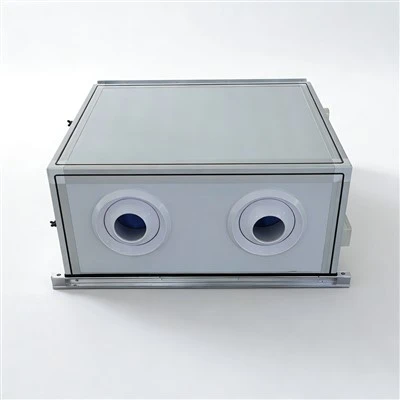
First, let’s cut through the confusion: a fan coil unit’s main job is to blow air over a cold evaporator coil to cool a space. For that coil to stay cold and not freeze, the refrigerant inside it has to stay at the right temperature, and air has to flow over that coil consistently. If either of those things goes sideways, you’re gonna get ice. It’s that simple. Let’s dive into the most common causes, the kind that pop up all the time in both residential and commercial FCUs.
The first big one? Low refrigerant charge. This is way more common than you’d think, especially in older units or ones that’ve had tiny leaks over time. Wait, “charge” just means the amount of refrigerant your system’s supposed to have, right? If you have less refrigerant than you should, the coil gets way colder than it’s supposed to—below freezing, in fact. That’s the point where moisture in the air sticking to the coil turns to ice instead of dripping off. Why do leaks happen? Sometimes it’s a loose connection from installation, sometimes corrosion from being in a damp basement or a busy office with high humidity. I’ve seen this so many times: a building owner calls us saying their FCU froze up out of nowhere, and a quick pressure test shows they’re 20% low on R-410A. The fix isn’t just adding more refrigerant, either—you have to find the leak and seal it, otherwise it’ll just happen again. Oh, and pro tip: if your tech says “we’ll just top it off” without checking for leaks, run the other way. That’s a band-aid, not a fix.
Next up, airflow issues. This is another top culprit, and it’s usually something super simple that’s easy to miss. Your FCU needs a steady stream of air moving through the coil to keep the coil from getting too cold. If air can’t get to the coil, or can’t blow through it evenly, ice builds up fast. Let’s list the usual airflow blockers. First, dirty air filters. I’m talking about the ones everyone forgets to change every 1-3 months (depending on your space). If that filter’s caked with dust, pet hair, mold, whatever, it restricts air from getting to the coil. Less air over the coil = colder coil = ice. It’s that straightforward. We once had a customer who replaced their 5-year-old filter with the same one, and their FCU froze within a week. Swapping the filter fixed it for under $20—way cheaper than calling a tech.
Another airflow block: dirty evaporator coils themselves. The coil gets covered in dirt, mold, and grime over time, just like the filter. That gunk insulates the coil, so the refrigerant’s cold can’t reach the air blowing over it, making the coil surface drop below freezing. Ice forms, and it gets worse as more dirt builds up. Even in commercial spaces where they do scheduled maintenance, we see this—sometimes cleaning the coil is skipped, so it’s the first thing to go wrong. And don’t forget the air vents! If all your vents in a certain room are closed, that changes the airflow balance for the whole FCU. The unit has to push air harder to get where it’s needed, which can make parts of the coil too cold, leading to freezing. I’ve had office managers come to us saying half their vents are open, so their FCU’s fine, but they didn’t check the ones in the storage closet—closed vents there threw the whole system off.
Then there’s the problem with blower fans or motors. If the fan that blows air over the coil is weak, or the motor’s slowing down, airflow drops. Old fan belts that are loose or worn out can cause that too. We did a service call last year where a 10-year-old FCU’s fan belt had stretched so much it was slipping, so the fan was only turning at half speed. The coil iced up in 48 hours. Replacing the $15 belt fixed it. Sometimes, the blower wheel gets clogged with gunk too—dust, lint, even small bugs. That slows the fan down, same issue. Less airflow = frozen coil.
Humidity’s another big one, especially in warmer, more tropical climates, or in spaces like gyms, restaurants, or indoor pools where humidity is through the roof. FCUs are designed to remove moisture from air along with cooling it. If your space has way more humidity than the unit is built to handle, that moisture can freeze on the coil instead of condensing into water to drain away. For example, if you have a 3-ton FCU installed in a 5-ton space, it can’t cool enough and can’t remove enough moisture, leading to freezing. We see this a lot in new apartment buildings where contractors pick the cheapest FCU instead of the right size for the space. Also, if your drain line is clogged, that condensation can’t drain away, which leads to higher moisture around the coil, feeding ice growth. That’s a double whammy: no proper drainage = more moisture = easier to freeze.
Wait, there are also less common causes, like improper installation. If someone installs an FCU at a weird angle, not level, the refrigerant lines aren’t pitched right, or there’s not enough insulation on the lines, that can mess with refrigerant flow and make the coil too cold. Or, if the thermostat is set too low for too long—like, cranking the AC to 60 degrees when it’s 90 outside—overcooling the coil past the freezing point. Some people think lower = colder, but that’s not how it works for FCUs. You should usually keep thermostats at 72-78 degrees for efficiency, and to prevent freezing.
Now, let’s talk about what to do right now if your FCU is already frozen, because I know you’re not here just for the why, you want the fix. First, shut off the FCU immediately. Running it with ice can damage the coil, the fan, or even cause water damage from melting ice dripping all over your space. Then, turn up the thermostat to “heat” mode (if it’s a heat-cool unit) or just turn it off, and open any windows near the unit to let warm air melt the ice. Don’t use a hair dryer or heat gun—those can melt the coil too fast and cause damage, or even start a fire. Let it melt naturally, it might take 4-6 hours. Once it’s fully melted, check the easy stuff first: change the air filter, make sure all vents are open, clear any debris around the unit. Then turn it back on. If it freezes again, it’s probably a bigger issue—low refrigerant, a leak, or a fan problem. That’s when you need a pro, and if they say they need to replace the coil or the unit, give us a shout—we’re here to supply reliable FCUs that are built to handle these issues without breaking the bank.
Now, a quick note on preventing this stuff in the first place, because avoiding a freeze is way easier than fixing it. First, schedule regular maintenance: change filters every 1-3 months, clean coils once a year, check drain lines to make sure they’re not clogged, have a tech do a refrigerant check once a year. Second, make sure your FCU is the right size for your space—no cheap, under-sized units that can’t handle the load. Third, keep vents open, no closed vents blocking airflow. Fourth, if you live in a humid area, make sure your unit has proper dehumidification settings. All these small steps will save you from the headache of a frozen coil, and keep your FCU running longer.

At the end of the day, frozen FCUs are almost always avoidable, even if they seem like a random surprise. Most of the time, it’s a simple fix: a dirty filter, a loose belt, a tiny refrigerant leak. But if you’re dealing with recurring freezes, or you’re looking to upgrade your FCU to something more reliable, we’ve got you covered. Whether you’re a small business owner who needs a single unit for your store, or a property manager who needs units for a whole apartment complex, we supply high-quality FCUs designed to prevent freezing, handle variable humidity, and last for years. We don’t do overpriced, low-quality models that cause headaches—our units are built with proper insulation, accurate refrigerant charge capabilities, and durable blowers to keep airflow consistent, so you don’t have to deal with frozen coils or broken AC. If you’re tired of dealing with FCU freezing issues, or you just want to get a quote for a new unit, reach out to our team to discuss your needs. We can help you figure out exactly what’s causing your freeze, or supply the right FCU to fit your space and budget.
References
AC ASHRAE Handbook—HVAC Systems and Equipment, American Society of Heating, Refrigerating and Air-Conditioning Engineers, 2021
“Fan Coil Unit Freezing: Causes, Troubleshooting, and Prevention,” HVAC Troubleshooting Guide, 2022
Refrigeration and Air Conditioning Technology, 8th Edition, Cengage Learning, 2019
Shandong Kasuo Air Conditioning Equipment Co., Ltd.
Shandong Kasuo Air Conditioning Equipment Co., Ltd. is one of the most professional fan coil unit manufacturers and suppliers in China, featured by quality products and good price. Please rest assured to wholesale high-grade fan coil unit for sale here from our factory. We also accept customized orders.
Address: Luquantun Industrial Park, Wucheng District, Dezhou City, Shandong Province
E-mail: ksair@kasuoac.com
WebSite: https://www.kasuoac.com/
