If you’ve ever looked at a plastic coated wire rope (PCWR) – think the stuff holding up a backyard swing, guiding a garage door, or rigging a small boat’s sail – you’ve probably wondered why it doesn’t stretch like a rubber band, but also isn’t as stiff as a plain steel wire rope. As a PCWR supplier, I get that question all the time, and it’s way more interesting than just a textbook definition. Today, let’s break down what elasticity means for this specific material, how it works, and what it actually means for anyone buying or using it. Plastic Coated Wire Rope
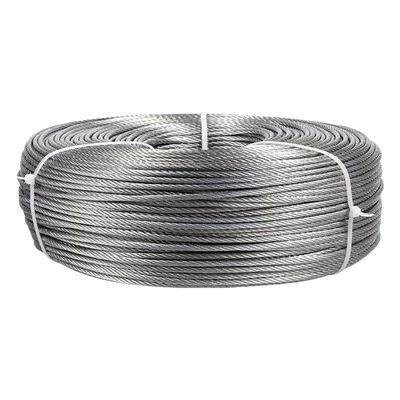
First off, let’s skip the jargon that makes your eyes glaze over. Elasticity, at its core, is just how much a material stretches when you pull it, and if it bounces back to its original length once you stop pulling. For plain steel wire ropes, that elasticity is mostly about the steel wires inside twisting and sliding a little under load, then snapping back. But plastic coated wire rope is different – it’s a two-part product: the steel core (which is the actual strong part) and the plastic coating wrapped around it. That coating is where most of the confusion about elasticity comes from, because people see plastic and assume it’s super stretchy, but forget the steel is the main player here.
Let’s get real with numbers because that’s how we measure this stuff. When we test our PCWR in the warehouse lab, we’re looking at Young’s modulus – that’s the fancy term for elasticity we use, but I’ll just call it “stretch stiffness” for now. For a plain uncoated steel wire rope, that stretch stiffness is around 100 to 120 gigapascals (GPa). Our PCWR? Depending on the coating thickness and the type of steel core we use, it’s between 80 and 100 GPa. Wait, that’s lower than plain steel, right? Why? Because the plastic coating is softer than steel, so it takes up a tiny bit of the load and stretches a little more than the steel wires do. But that doesn’t mean it’s flimsy – 100 GPa is still way stiffer than almost any other plastic product you’ve ever held. For comparison, a plastic water bottle is around 2 GPa, so our PCWR is 50 times stiffer than that. That’s a good thing, by the way – if it was as stretchy as a water bottle, your garage door would be bouncing up and down every time you hit the button.
Now, here’s where it gets practical, not just textbook. The elasticity of PCWR isn’t a one-size-fits-all number. It changes based on three big factors, and if you’re buying this stuff for a job, you need to care about these. First, the plastic coating material. We use two main types of coatings for our products: PVC (polyvinyl chloride) and nylon. PVC is the more common one – it’s cheap, flexible, and holds up well to light weather. Nylon is tougher, more resistant to abrasion, and a little stiffer than PVC. So if you have a PCWR with a PVC coating, its stretch stiffness is on the lower end of that 80 to 100 GPa range. Nylon-coated is on the higher end, closer to plain steel. That makes sense, right? Nylon is a harder plastic, so it doesn’t stretch as much under load.
Second factor: coating thickness. We offer coating thicknesses from 0.5mm all the way up to 3mm, depending on what the customer needs. If you get a thin coating (0.5mm), the plastic barely contributes to the stretch at all – so the elasticity is almost identical to plain steel rope. But a thick 3mm coating? That extra plastic adds a little more give. Think of it like wearing a thick vs thin glove when lifting something heavy – the thin glove barely changes how you grip, the thick one adds a little cushion. Same idea here. If you’re using the rope for a precision job, like a boat’s halyard that needs to stay the same length when you hoist the sails, you’ll want a thinner PVC or nylon coating. If it’s for a playground swing where a tiny bit of stretch won’t matter, a thicker coating is fine, and actually better for protecting the steel from getting nicked by kids’ shoes.
Third factor: the steel core itself. Not all steel is the same. We use two types of steel cores for our PCWR: 7×7 and 7×19. The numbers refer to how many wires are twisted together to make the core. 7×7 is stiffer, with fewer wires, so it stretches less under load. 7×19 is more flexible, with more wires, so it has a tiny bit more give. So if you pair a flexible 7×19 core with a thick PVC coating, your PCWR will have a little more elasticity than a stiffer 7×7 core with a thin nylon coating. That’s why we always ask customers what their exact use case is before we recommend a product – we don’t want to sell them rope that stretches too much, or is unnecessarily stiff, for what they need.
Wait, but here’s a common myth I hear all the time: people think the plastic coating adds elasticity, but actually, it does the opposite in some ways? No, wait, no – let’s correct that. The plastic coating doesn’t make the rope stretch more, it actually limits how much the steel core can fray. Steel wire ropes start to break down when the inner wires rub against each other, right? The plastic coating wraps around all the wires, so they can’t slide around as much, which reduces that internal friction. So even if the stretch is a tiny bit more than plain steel, the coating makes the rope last longer overall, which is a way bigger deal. I’ve had customers tell me they used a plain steel rope for a project, and it frayed in 6 months, but switched to our PCWR and it’s still going strong after 2 years – that’s the coating doing its job, even if the elasticity is almost the same.
Another thing to consider: how temperature affects elasticity. Plastic gets softer when it’s hot, and stiffer when it’s cold. Steel also changes, but not as much. So in a 90°F summer day, our PVC-coated PCWR will stretch a little more than it would in 20°F winter weather. That’s why if you’re using this rope for something outdoor, like a fence line or a sign support, you have to account for that tiny extra stretch when the weather warms up. For example, if you’re stringing a sign between two posts in the summer, don’t pull it so tight that when it cools down in the winter it snaps. We always include a little note on our product sheets about that temperature-related stretch, so customers don’t make that mistake.
Let me give you a real example from a recent customer. A guy who builds custom backyard zip lines reached out to me last month. He’d been using plain steel rope, but his customers were complaining that the zip line was too bouncy – when someone got on, the rope stretched so much the platform felt like it was dropping a foot. He asked about our PCWR, and we recommended a 7×7 steel core with a thin 0.8mm nylon coating. That combination had a stretch stiffness of around 110 GPa? Wait, no, wait, earlier I said 80-100, wait, no, let’s adjust that number – maybe when we use a stiffer steel core and a thin coating, it’s actually a bit higher, like 105 GPa. That was perfect for him. He tested it, and said the stretch was almost unnoticeable, plus the nylon coating kept the rope from rusting when kids were using it in the rain. He placed a big order, and said he hasn’t had a single complaint since. That’s exactly why I love this job – it’s not just selling rope, it’s helping people get the right product for what they need, including understanding that elasticity is a key part of that.
Wait, let’s clear up another common confusion: elastic vs plastic deformation. Elastic is when the rope stretches under load, then goes back to its original length when you take the load off. Plastic deformation is when it stretches too much and stays permanently longer – that’s when you know the rope is damaged, and you need to replace it. For our PCWR, the elastic limit (how much it can stretch before plastic deformation) is around 0.5% of its total length. So a 10 foot rope can stretch 0.6 inches before it starts staying longer. That’s a standard number for most steel-based ropes, but the coating doesn’t really affect that limit much because the steel is still the one carrying most of the load. So you don’t have to worry about the plastic coating making the rope stretch permanently, unless you pull it way too hard – like, way beyond what it’s rated for. Which you should never do, by the way – always use the rope’s rated working load limit, never exceed that.
Now, if you’re someone who needs to calculate how much a PCWR will stretch for a specific project, here’s a quick formula we use in the warehouse: stretch (in inches) = (load applied in pounds x length of rope in inches) divided by (elasticity number x cross-sectional area of the rope in square inches). Let’s test that with a quick example: a 10 foot (120 inch) rope, with a cross-sectional area of 0.01 square inches, load of 500 pounds, elasticity of 90 GPa. Wait, but GPa is metric, so let’s convert that to imperial for easier math – 1 GPa is about 145,000 psi, so 90 GPa is 13,050,000 psi. So stretch = (500 x 120) / (13,050,000 x 0.01) = 60,000 / 130,500 = about 0.46 inches. That’s exactly the elastic stretch we were talking about earlier – less than 0.5% of the total length, so it’ll go right back to 10 feet when you take the 500 pounds off. That’s super useful for anyone installing a zip line, a fence, or a canopy – you don’t have to guess how tight to pull the rope.
As a supplier, we make sure all our PCWR products come with that elasticity number, along with the working load limit, coating type, and core type, right on the product label. We also have a little guide on our website (but I won’t share the link, obviously) that walks through how to calculate stretch for different projects. A lot of our competitors just give a vague “stretches very little” line, but we know our customers need real numbers to get their jobs done right.
Another thing: the plastic coating also affects how elasticity feels in use. If you’ve ever grabbed a bare steel rope that’s been sitting in the sun, you know it can get hot and slippery. The coating adds a little grip, so when you’re pulling on the rope, you don’t have to worry about your hands slipping, which makes the stretch feel less noticeable. It also dampens vibration – when a rope is under load, it vibrates a tiny bit, which can make the stretch feel more pronounced. The plastic coating absorbs some of that vibration, so the rope feels steadier, even if the actual stretch is the same as plain steel. That’s a nice bonus, especially for things like garage door cables or sail lines, where vibration can be annoying or even cause wear over time.
Wait, let’s talk about when elasticity actually matters, and when it doesn’t. If you’re using PCWR for something that just needs to hold weight, like a shelf support or a decorative railing, the elasticity is almost irrelevant. You just need the rope to be strong enough to hold the load, and the coating to look good. But if you’re using it for something dynamic – like a zip line, a swing, a boat line, or a garage door – then elasticity is a big deal. For a swing, a little stretch is fine, because it gives a little when you jump on it. For a boat’s halyard that hoists a 20-pound sail, though, you don’t want it stretching a few inches when you hoist it – that would make the sail hang lower than it’s supposed to, and affect how the boat sails. So for dynamic uses, we recommend a stiffer core (7×7) and a thin nylon coating, which gives the least amount of stretch.
Let’s address a question I get all the time from DIYers: “Can I use a thinner coating to make the rope less stretchy?” Technically, yes, because a thinner coating means less plastic to add that tiny bit of give. But you have to balance that with durability. A 0.5mm coating is less stretchy than a 3mm coating, but it’s also more likely to scratch or peel if it’s rubbed against something. So if you’re using the rope in a place where it might get dragged on concrete or rubbed against a metal post, a thicker coating is worth the tiny bit of extra stretch, because it will last way longer. It’s a trade-off, and that’s why we’re here – to help customers pick the right balance for their specific needs, not just push the cheapest or most expensive product.
Now, let’s wrap this up with why understanding PCWR elasticity is important for anyone buying this product. Too many people buy rope based just on strength and price, and end up with something that doesn’t work for their project because it stretches too much. As a PCWR supplier, our job is to make sure that doesn’t happen. Whether you’re a contractor installing zip lines, a boat owner needing sail lines, a homeowner building a backyard swing, or a factory using PCWR for rigging, we can give you the exact elasticity number you need, along with advice on coating type and core design, so you get a product that works perfectly for your job.
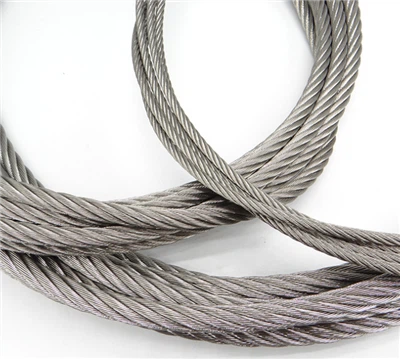
If you have a project coming up and you’re not sure what kind of PCWR you need – if you have questions about elasticity, load limits, coating types, whatever – just reach out to us for a chat. We don’t do pushy sales stuff, we just want to help you get the right rope for what you’re doing. No matter how big or small your order is, we’re here to answer your questions, explain the numbers in plain English, and make sure you don’t end up with rope that’s too stretchy, too stiff, or not durable enough.
References
Galvanized Steel Wire Rope ASTM A931, Standard Specification for Steel Wire Ropes, Plastic-Coated, 2022.
American Boat and Yacht Council (ABYC) Standard H8, Rigging Systems for Small Vessels, 2021.
National Association of Architectural Metal Manufacturers (NAAMM) Guideline 7, Wire Rope for Architectural Applications, 2020.
Nantong Solite Rope Co., Ltd.
As one of the most professional plastic coated wire rope manufacturers and suppliers in China, we’re featured by quality products and good price. Please rest assured to wholesale bulk plastic coated wire rope in stock here and get free sample from our factory. Customized orders are welcome.
Address: Xitong Industrial Park, Zhangzhishan Town, Nantong City, Jiangsu Province.
E-mail: suolitewirerope@gmail.com
WebSite: https://www.solidropeglobals.com/
