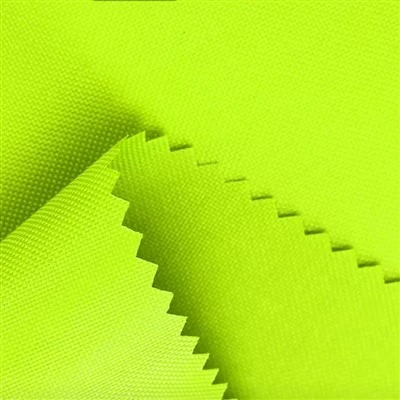
As a supplier of fluorescent fabric, I’ve been deeply involved in the world of textiles for years. One question that often puzzles customers is about the sound absorption of fluorescent fabric. Sound absorption is a complex physical phenomenon, and understanding how fluorescent fabric interacts with sound waves can open up new applications for this versatile material. Fluorescent Fabric
1. Basic Concepts of Sound Absorption
Before delving into the sound – absorption properties of fluorescent fabric, it’s essential to understand what sound absorption is. Sound waves are a form of mechanical wave that travels through a medium, such as air. When a sound wave encounters a surface, three things can happen: reflection, transmission, and absorption. Absorption occurs when the sound energy is converted into other forms of energy, typically heat, as the sound wave interacts with the material.
The sound – absorption coefficient is a key parameter used to measure a material’s ability to absorb sound. It ranges from 0 to 1, where 0 means the material reflects all the sound, and 1 means the material absorbs all the sound. Different materials have different sound – absorption coefficients depending on their physical properties, such as density, porosity, and thickness.
2. Factors Affecting the Sound Absorption of Fluorescent Fabric
2.1. Fabric Structure
The structure of fluorescent fabric plays a crucial role in its sound – absorption ability. Fluorescent fabrics are often woven or knitted. Woven fabrics with a tight weave structure may have less sound – absorption capacity compared to knitted fabrics with a looser, more porous structure. The pores in the fabric act as small chambers where sound waves can enter and lose energy through friction with the fabric fibers.
For example, a knitted fluorescent fabric with an open – mesh structure will allow sound waves to penetrate more easily. As the sound waves travel through the pores, they cause the fibers to vibrate. This vibration dissipates the sound energy as heat, resulting in sound absorption. In contrast, a tightly – woven fluorescent fabric may reflect more sound waves due to its smooth and compact surface.
2.2. Fiber Material
The type of fibers used in fluorescent fabric also affects its sound – absorption properties. Fluorescent fabrics can be made from various fibers, including polyester, nylon, and cotton. Polyester fibers, which are commonly used in fluorescent fabrics due to their durability and color – fastness, have different sound – absorption characteristics compared to natural fibers like cotton.
Polyester fibers are generally more rigid than cotton fibers. This rigidity can influence the way sound waves interact with the fabric. In some cases, polyester – based fluorescent fabrics may have a lower sound – absorption coefficient at certain frequencies because the rigid fibers are less likely to vibrate and convert sound energy into heat. On the other hand, natural fibers like cotton can provide better sound absorption in the mid – frequency range, as they are more flexible and can absorb sound through internal friction.
2.3. Thickness and Density
The thickness and density of fluorescent fabric are important factors. A thicker fabric generally has better sound – absorption capabilities than a thinner one. This is because a thicker fabric provides more material for the sound waves to interact with, increasing the chances of sound energy being absorbed.
Density also affects sound absorption. A fabric with a higher density may have a different sound – absorption profile. For instance, a high – density fluorescent fabric may be more effective at absorbing high – frequency sounds, while a lower – density fabric may have better performance in the low – to mid – frequency range.
3. Measuring the Sound Absorption of Fluorescent Fabric
To accurately measure the sound – absorption properties of fluorescent fabric, several standardized testing methods can be used. One of the most common methods is the reverberation chamber test. In this test, a sample of the fluorescent fabric is placed in a reverberation chamber, which is designed to create a diffuse sound field.
The sound source emits a known sound signal, and the decay time of the sound in the chamber is measured both with and without the fabric sample. By comparing the decay times, the sound – absorption coefficient of the fabric can be calculated. The absorption coefficient is then plotted as a function of frequency to obtain the sound – absorption spectrum of the fabric.
Another method is the impedance tube test. This test measures the normal incidence sound – absorption coefficient of a small fabric sample. The fabric is placed at one end of an impedance tube, and a sound wave is sent through the tube towards the fabric. By measuring the reflected sound and comparing it with the incident sound, the sound – absorption coefficient at normal incidence can be determined.
4. Applications of Sound – Absorbing Fluorescent Fabric
4.1. Acoustic Wall Panels
Fluorescent fabric with good sound – absorption properties can be used in the production of acoustic wall panels. These panels can be installed in spaces such as recording studios, theaters, and conference rooms to reduce acoustic reflections and improve the overall sound quality. The fluorescent property of the fabric can also add a decorative element to the space, making it both functional and aesthetically pleasing.
4.2. Noise – Reducing Curtains
Sound – absorbing fluorescent fabric can be made into curtains. These curtains can be used in homes, offices, or industrial settings to block out external noise or reduce internal noise reverberation. Their fluorescent quality can also be useful in low – light environments, providing a safety – enhancing feature.
4.3. Automotive Interiors
In the automotive industry, sound – absorbing fluorescent fabric can be used for interior trim. It can help reduce road noise and engine noise inside the vehicle cabin, providing a more comfortable driving experience. The fluorescent aspect can also be used for safety markings or decorative purposes.
5. Advantages of Our Fluorescent Fabric in Terms of Sound Absorption
As a professional fluorescent fabric supplier, we have invested a lot of time and effort in researching and improving the sound – absorption properties of our products. Our R & D team has developed a unique manufacturing process that enhances the porosity and flexibility of the fabric, resulting in better sound – absorption performance.
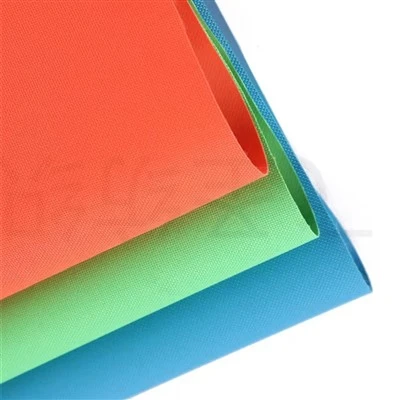
We also offer a wide range of fluorescent fabrics with different fiber compositions, thicknesses, and structures. This allows customers to choose the most suitable fabric for their specific sound – absorption needs. Whether it’s for high – frequency or low – frequency noise reduction, we can provide a customized solution.
6. Contact Us for Purchasing
Reflective Fabric If you are looking for high – quality fluorescent fabric with excellent sound – absorption properties, look no further. We are ready to provide you with detailed product information and samples. Our team of experts can also offer technical support and guidance on the best fabric selection for your applications. Contact us to start a negotiation and discover how our fluorescent fabric can meet your requirements.
References
- Berardi, U., Iannace, L., & de Marco, D. (2013). Acoustic properties of natural fibre composites: A review. Construction and Building Materials, 48, 859 – 873.
- Craik, J. (2006). The Structure and Mechanics of Woven Fabrics. Cambridge University Press.
- Kinsler, L. E., Frey, A. R., Coppens, A. B., & Sanders, J. (2000). Fundamentals of Acoustics. Wiley.
Wujiang Jiashunxin Spray Weaving Co., Ltd.
As one of the most professional fluorescent fabric manufacturers and suppliers in China, we’re featured by quality products and good service. We warmly welcome you to wholesale bulk customized fluorescent fabric from our factory. If you have any enquiry about free sample, please feel free to email us.
Address: Xingli New Village, Lili Town, Wujiang District, Suzhou City, Jiangsu Province
E-mail: xuzhiqiang20260525@163.com
WebSite: https://www.shunbangfabric.com/
