If you’ve ever stood on a boat dock at sunrise, wind tangling your hair, eyes scanning the horizon for a buoy or a friend’s sailboat in the distance, you’ve probably thought about how to stay connected out there. I’ve spent the last decade as a marine radio supplier, meeting captains, weekend sailors, and everyone in between—and one question comes up more than any other: “Why bother with a marine radio when my regular AM/FM or Bluetooth speaker works just fine on land?” Marine Radio
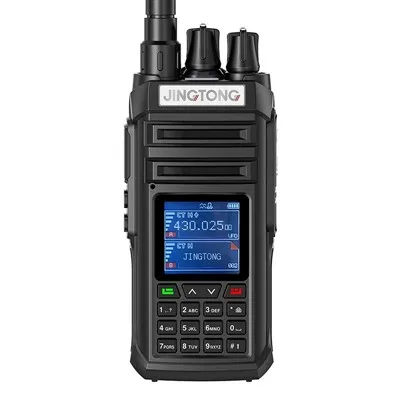
It’s a fair question. A regular radio is cheap, you already have it, and it can play your favorite playlist while you cruise a quiet lake or a calm coastal cove. But here’s the thing: the water doesn’t follow the same rules as land. The same features that make a regular radio convenient for picnics or road trips become liabilities when you’re miles from shore, dealing with changing weather, or counting on other boaters to keep you safe. Let me break this down like I do with every new customer who walks into my shop (or messages me online, these days) because understanding the difference could one day make all the difference on the water.
First, there’s frequency. Regular radios rely on Very High Frequency (VHF) bands that are optimized for short, line-of-sight communication. That means if a hill or a distant island is between you and the person you’re talking to, the signal cuts out entirely. Worse, their power output is limited—usually just a few watts—so range tops out at 10 or 15 miles on a good day. Marine radios run on a specific VHF marine band, regulated by the International Telecommunication Union (ITU), with dedicated channels only for boat-to-boat, boat-to-shore, and emergency use. These channels are calibrated for up to 60 watts of power, and their frequency is tailored to bend around the curvature of the Earth a little, not bounce straight off the first solid object. On open water, that range can jump to 20 or even 30 miles—enough to reach another boater who’s helping you with a broken mast, or the Coast Guard if something goes wrong. I’ve seen this play out firsthand: two fishing boats 25 miles apart, checking in on channel 16 (the universal maritime distress and safety channel) when their GPS cut out during a fog bank. A regular radio would have never picked up that call; the hill between their two positions blocked the signal completely.
Then there’s dedicated emergency functionality, and this is where regular radios fall flat in a big way. Every marine radio has Channel 16 programmed in by default—this is the channel you monitor 24/7 when you’re underway. It’s not for casual chatter; it’s for Mayday calls, distress beacons, and urgent safety alerts. If you’re in trouble, you key into Channel 16, say “Mayday, Mayday, Mayday,” give your boat name, location, number of people on board, and type of emergency, and other boaters or the Coast Guard can respond immediately. Regular radios don’t have a dedicated emergency channel at all. Their broad frequency bands mean that critical safety broadcasts (like a sudden storm warning for your area) might get mixed in with a country music station or a traffic update, and you’d never even hear it unless you were actively scanning every frequency manually. Worse, when you do call for help on a regular radio, the person on the other end might not even know what maritime emergency protocols are, so your call could be ignored or misunderstood. I’ve had a customer tell me he tried to call for help after his engine died in a remote part of the Gulf of Mexico, only to find that the only person who picked up was a truck driver 40 miles inland who had no idea how to coordinate a rescue. That’s a scenario no boater wants to be in.
Another often-overlooked feature is DSC, or Digital Selective Calling, which is standard on modern marine radios. DSC lets you send a digital distress alert that includes your exact GPS coordinates automatically—no need to fumble with a map or try to describe your location to the Coast Guard in a panic. A regular radio can’t do that. Even if you have a GPS on your boat, it won’t sync with a regular radio to send your coordinates, so you’re stuck reciting latitude and longitude (or worse, “we’re halfway between that red buoy and the big lighthouse”) to someone who might not know the area. DSC also lets you send a less urgent “urgent” or “safety” alert, like a broken rudder or a floating hazard, that cuts through any static or other signals on Channel 16. For anyone who’s spent time on the water, you know how chaotic a busy channel can get—everyone talking at once, static from thunderstorms interfering, or a ferry blaring its horn over your call. Marine radios are designed to cut through that noise, while regular radios rely on basic signal processing that can’t distinguish between your call and background clutter.
Then there’s weather integration, which is non-negotiable for boating. A regular radio can pick up local weather stations, but those stations are designed for land areas, not the open water conditions that affect boaters. Marine weather broadcasts are specific to coastal zones, lakes, and even individual bays, with updates that include wind speeds, wave heights, and storm tracks that change rapidly on the water. Most modern marine radios have weather alert features that automatically switch from whatever you’re listening to and play an alert if a severe weather warning is issued for your area. Some even sync with your chartplotter to overlay weather data directly on your navigation screen. Regular radios might play a weather alert tone, but they won’t prioritize that alert over your playlist or a call you’re taking, so you could miss a warning for a fast-moving thunderstorm that could capsize your small boat. Last month, a sailboat customer came into my shop after his regular radio didn’t pick up a sudden gale warning while he was sailing off the coast of Maine. He said he saw the dark clouds moving in, but by the time he turned to his phone for a weather app, the wind had already picked up to 40 knots. A marine radio would have alerted him before the storm hit, giving him time to reef his sails and get to a safe cove.
Let’s talk about durability, too. Boating is a harsh environment: salt spray, rain, extreme temperatures, constant vibration from engines, and being jostled around on rough water. Regular radios aren’t built for that. Most are lightweight, with plastic casings that can crack if you drop them on a hard dock, and their internal parts aren’t sealed against water or dust. A marine radio is designed to meet IPX7 or IPX8 waterproof standards, meaning it can be submerged in up to 3 feet of water for 30 minutes or more. They’re made with corrosion-resistant components, and their buttons are sealed so salt spray can’t get inside and cause a short circuit. I’ve sold marine radios to boaters who have had theirs for 10 years, leaving them on the deck in the rain every weekend, and they still work perfectly. A regular radio would die after one trip out in a light drizzle, let alone a heavy downpour or being knocked overboard.
And let’s not forget about interoperability. Mariners follow a global set of rules, and marine radios are universal. If you’re boating in Florida, the Bahamas, or even the Mediterranean, any other boater or coast guard unit will know how to use the same channels and protocols as you. A regular radio is limited to your local area, and even if you go to a different country, their local radio channels won’t match what your regular radio is set to. I once had a customer who took his family on a boat trip to the Florida Keys, and his regular radio couldn’t pick up the local channel that communicates with the ferry lines running between Key West and the other islands. He almost got stuck waiting for a ride because he couldn’t call ahead to confirm a slot. That’s the kind of hassle that a marine radio eliminates entirely.
I know what some of you are thinking: “What about my phone? It has GPS, weather apps, and I can call 911 if I need help.” Phones are great for land, but on the water, cell service is spotty at best. Most coastal areas have cell towers, but once you get 10 miles out, that signal cuts off completely. I’ve had customers tell me their phones worked fine on a trip to the barrier islands, only to realize halfway through the day that they had no service for hours when they crossed a bay. Even when you do have service, cell phones can die, get water damaged, or have weak batteries in cold or hot weather. A marine radio runs on your boat’s battery, which is designed to last for days, and it has a separate power supply so it won’t drain your main battery if you forget to turn it off. Plus, when you call for help on a cell phone, the emergency services can’t always track your exact location as quickly as they can with DSC on a marine radio.
Now, I’m not here to bash regular radios. They’re perfect for backyard barbecues, tailgating, or listening to your favorite tunes in your car. But when you step onto a boat, you’re entering a space that has its own set of risks and rules. The same convenience that makes a regular radio great on land becomes a danger on the water. Marine radios aren’t just a piece of electronics—they’re a safety tool, a way to connect with other boaters, and a way to keep yourself and your crew safe no matter where you sail.
If you’re still using a regular radio for boating, or you’re new to owning a boat and figuring out what gear you need, I’d encourage you to take a close look at what a marine radio can do. It’s an investment in peace of mind, not just a purchase for fun. Whether you’re a weekend sailor, a commercial fisherman, or someone who just likes to take their small boat out on the lake, a marine radio is non-negotiable.
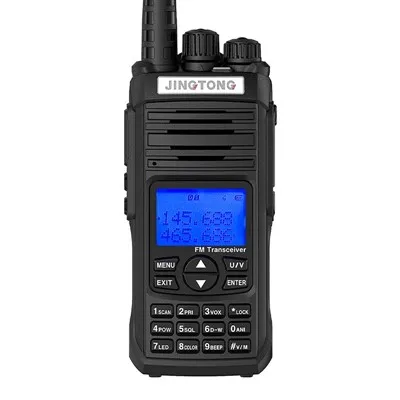
If you’re ready to upgrade your boating safety and reliability, or you have questions about which marine radio is right for your needs, I’m here to help. Reach out to me to start a conversation about your requirements, compare models, and find the perfect marine radio for your boat.
Marine Radio References:
- International Telecommunication Union. (2021). Marine VHF Radio Band Regulations. ITU Radiocommunication Bureau.
- U.S. Coast Guard. (2022). Boating Safety Guide: Marine Radio Use. U.S. Department of Homeland Security.
- National Oceanic and Atmospheric Administration. (2023). Marine Weather Broadcast Protocols. NOAA National Weather Service.
- American Boat and Yacht Council. (2021). Standards for Marine Electronics Installation and Durability. ABYC International.
Jingtong (Quanzhou) Electronics Co., Ltd.
We are one of the most professional marine radio manufacturers and suppliers in China, specialized in providing high quality customized service. We warmly welcome you to buy durable marine radio made in China here from our factory. For price consultation, contact us.
Address: No.288, Si Huang Industry Zone, Xia Mei Town, Nan An, Quanzhou, Fujian province, China 362302
E-mail: jtdjj@jtdjj.com
WebSite: https://www.jteradio.com/
