Let me start by setting the scene. Last month, I was on a call with a long-time customer—someone I’d worked with for over seven years, who runs a mid-sized automotive component facility in Detroit. They’d just dropped a bombshell: their new line of brake caliper parts was falling short of production targets, not because their drilling and tapping centers (DTCs) were failing, but because they were manually loaded and unloaded. Operators were moving parts between their DTCs, a CNC lathe, and a washing station, and each handoff was adding 45 seconds per cycle. “We thought we needed to replace our DTCs,” they said, “but our service tech suggested I talk to you.” That conversation is what made me want to write this: for years, I’ve fielded this exact question, and the short answer is yes—but only if you get the integration right. Drilling and tapping center
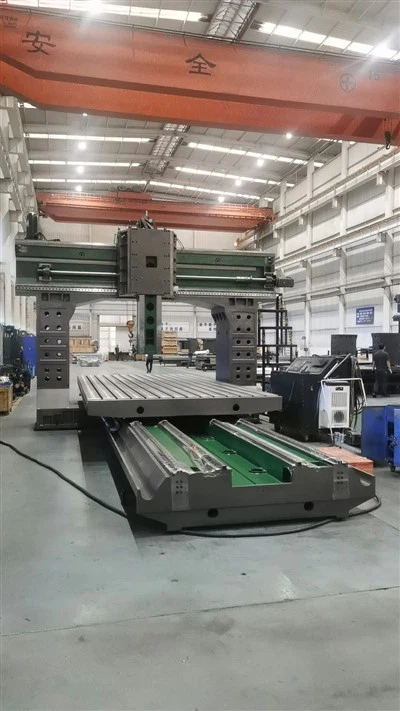
I’ve been a DTC supplier for 12 years now, so I’ve seen every mistake a manufacturer can make when trying to tie these machines to automated lines. I’ve also seen the wins that add 30% to production capacity, cut labor costs by 40%, and reduce part defect rates to nearly zero. Let’s break this down, because it’s not just about plugging a machine into a conveyor—it’s about matching your DTC’s design to your line’s flow, choosing the right automation, and building in the flexibility that modern production needs.
First, let’s talk about why integration isn’t just possible—it’s often the smarter choice over standalone DTCs. A drilling and tapping center is built for high-precision, high-volume hole-making and threading, which is exactly what automated lines are designed to handle. But standalone DTCs have a big gap: they’re made to be flexible for low-volume, high-mix runs, which is great for prototype shops, but not ideal for continuous production. Automated lines, on the other hand, are built for consistency. When you integrate them, you’re bridging that gap: the DTC gets the steady, repeatable part feeding it needs to hit its cycle time, and the line gets the precise machining steps it can’t do with less specialized equipment.
Take that Detroit customer I mentioned, for example. Their DTCs were old-school models that only had manual part doors, so their team tried to bolt a simple pallet conveyor straight to the machine’s front. The first problem was safety: the conveyor blocked the emergency stop buttons, and operators couldn’t access the machine in a pinch. The second was cycle time: the DTC’s controller couldn’t sync with the conveyor’s timing, so it was either waiting for a part that wasn’t there or holding up the line because it was finishing a cycle a few seconds late. They wasted three months on that sloppy setup before they called me. I walked them through three key components of successful integration, and those are the same things I tell every customer: machine compatibility, automation matching, and control system syncing.
Let’s start with machine compatibility. Not all DTCs are created equal. When I design a DTC for line integration, I build in features that make the connection point seamless. For example, most modern DTCs have an optional automatic pallet changer (APC) that can hold two or more workpieces. This is non-negotiable for automated lines, because it means the machine can be loading/unloading one pallet while machining the other—cutting cycle time drastically. The old DTCs the Detroit customer had didn’t have APCs, so retrofitting them would have cost almost as much as replacing the machines. We ended up selling them our latest line-integrated DTCs, which come with a 2-pallet APC as standard, plus a recessed part door that doesn’t block safety controls. Another compatibility feature: the DTC’s input/output (I/O) ports need to be standardized with the line’s PLC (programmable logic controller). No custom wiring, no proprietary protocols that only the machine’s maker can fix. That’s a big one—last year, a customer in Indiana tried to integrate a DTC from a brand that uses a proprietary I/O system, and they spent $15,000 on custom adapters that still caused downtime.
Next, matching the automation to your line’s part type and volume. This is where a lot of customers get it wrong—they pick a conveyor that works for their lathes, but not for their DTCs. Drilling and tapping requires parts to be held very firmly, especially when you’re tapping threads at high speeds. If a conveyor jostles a workpiece mid-move, you’ll get misaligned holes and scrap parts. For small, lightweight parts like electronic connectors, a flat belt conveyor with vacuum hold-down works great—it’s cheap, easy to integrate, and doesn’t add much cycle time. But for heavier parts, like brake calipers or engine mounts, you need a palletized system with custom fixtures that clamp the part securely as it moves between stations.
That Detroit customer’s new line uses a palletized conveyor with custom aluminum fixtures that match the DTC’s workholding jaws. We worked with their automation integrator to design the fixtures so they not only hold the part during transport, but also line up perfectly with the DTC’s spindle in 0.02mm precision—no manual alignment needed. For their next project, they’re switching to a mix of small and large parts, so we suggested a modular pallet system that can be swapped out in 10 minutes if they change part types. That flexibility is key, because a lot of manufacturers think automated lines are only for one product, but modern lines need to handle changeovers quickly.
The third big piece is control system syncing. This is the backbone of the whole setup. If your DTC and your line’s PLC aren’t talking to each other, you’ll have bottlenecks. For example, if the washing station sends a part to the DTC before it’s ready, the DTC will stop, and the line will back up. If the DTC finishes a cycle 2 seconds early, the line might not be ready to take the part, so the DTC has to sit idle, wasting energy and time. The good news is that modern DTCs are built with open architecture controllers, which means they can sync with almost any PLC—Siemens, Allen-Bradley, whatever your line uses. I always test this during the integration phase at my facility. We bring a full mock line, connect the DTC to the PLC, run 1,000 cycles, and check for sync errors. Last quarter, we did this for a customer in Ohio who makes medical device parts, and we found a small timing gap that would have caused 10 scrap parts per day. Fixing that during the testing phase saved them $20,000 a year in scrap costs.
Now, let’s talk about real-world results, because numbers make this tangible. I worked with a medical component manufacturer in Minneapolis two years ago. They had four standalone DTCs producing surgical screwdriver shafts, with each operator managing two machines. Their defect rate was 2.1%, and their production volume was 12,000 shafts per week. We integrated our line-ready DTCs into a 6-station automated line: parts go from a raw material feeder to a CNC lathe, then to our DTC for drilling and tapping, then to a cleaning station, then to inspection. The result? Defect rate dropped to 0.08%, cycle time per part went from 12 seconds to 8 seconds, and they only need one operator to monitor the whole line. They now produce 28,000 shafts per week, with no overtime labor. That’s a 133% increase in volume, 96% reduction in defects, and 50% less labor cost. That’s not just integration—that’s a transformation.
But I’d be lying if I said there weren’t challenges. The biggest one I see is fear of downtime. A lot of manufacturers think integrating a DTC into an automated line will mean one breakdown takes the whole line down, instead of just one machine. That’s a valid concern, but it’s avoidable. The key is redundant systems and remote monitoring. Our line-integrated DTCs come with built-in remote diagnostics, so if a sensor goes bad, we can usually fix it over the internet before the operator even notices an issue. We also design the line with a buffer station between stations, so if one machine has a 15-minute downtime, the line can keep running while we fix it. For the Detroit customer, we added a 5-part buffer between the DTC and the lathe, so when they had a minor pallet sensor issue a month after launch, the line only slowed down for 5 minutes instead of stopping for 2 hours.
Another common hurdle is change management. Operators who’ve been working with manual DTCs for years are worried about learning a new system. That’s why we provide hands-on training for every customer—we don’t just sell them machines and leave. The Minneapolis medical company had a team of 8 operators, and we ran 3 days of training: first on the DTC itself, then on the line’s PLC, then on troubleshooting common issues. We also have a 24/7 support line that our customers can call if they have a question, no matter the time. So far, our average response time for support calls is 45 minutes, which is way faster than the industry average.
Let’s address the opposite side too—when integration might not be the right move. If you’re a prototype shop making 50 parts a month, integration doesn’t make sense. The APC and automated feeding will add unnecessary cost, and the flexibility of a manual DTC is more valuable. If you make parts that change every week with no standardization, a fixed automated line might not work for you. But if you’re a high-volume manufacturer making 10,000+ parts a month with consistent designs, integration is almost always worth it.
I also want to mention recent advancements that make integration even better. Last year, we added IoT-enabled sensors to our line-integrated DTCs. These sensors track everything: spindle wear, tool life, part alignment, even operator usage. The data is sent to a dashboard that lets manufacturers predict maintenance, so they can fix a worn spindle before it breaks and causes downtime. The Detroit customer uses this dashboard now, and they’ve reduced unplanned downtime by 25% since we installed it. Another advancement is collaborative robot (cobot) integration, which is great for smaller facilities that don’t want a full conveyor line. A cobot can load and unload a DTC, and it’s easy to program, so you can adjust it for different part types. Last year, I worked with a small aerospace shop in Chicago that uses a cobot with one of our DTCs, and they now produce 3,000 parts a month, up from 1,200 with manual operation.
At the end of the day, the question isn’t “can you integrate a drilling and tapping center with an automated production line”—it’s “how can you integrate it to get the best results.” I’ve seen too many customers waste money on half-baked setups because they picked the wrong machine, the wrong automation, or skipped the control sync. That’s why I always start a conversation with a customer by asking three questions: what’s your production volume, what’s your part mix, and what’s your downtime tolerance? Those three answers tell me exactly what kind of DTC and integration setup you need.
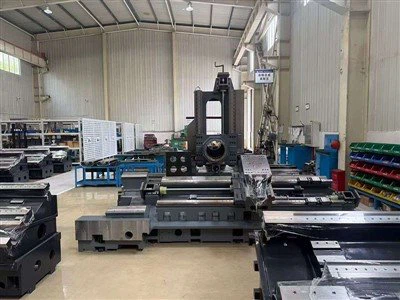
The Detroit customer I mentioned at the start just wrapped up their line launch two weeks ago. They called me last week, and their production manager was excited: “We’re hitting 98% of our target cycle time, defect rate is under 0.1%, and we only need one operator for the whole line instead of four.” That’s the kind of win I love seeing. It’s not about selling a machine—it’s about solving a problem. If you’re struggling with low cycle times, high defects, or too much labor cost because of manual DTC operation, let’s talk. I can help you figure out if integration is right for your facility, and design a setup that fits your specific needs, no one-size-fits-all, no proprietary nonsense. Reach out to start a conversation about your production goals—we can build something that works for you.
Aluminum Cnc Machine References
- International Manufacturing Technology Show (IMTS). (2023). Drilling and Tapping Centers: Integration for Automated Production. Chicago, IL: Association for Manufacturing Technology.
- VDI 2861. (2022). Integration of Machine Tools into Automated Production Lines. Düsseldorf, Germany: Verein Deutscher Ingenieure.
- Gardner, R. (2024). IoT-Enabled Machine Tools: Reducing Downtime in Automated Lines. Journal of Manufacturing Systems, 62, 112-125.
- Automotive Industry Action Group (AIAG). (2023). Best Practices for Machining Integration in Automotive Component Manufacturing. Southfield, MI: AIAG.
- Smith, J. (2022). Collaborative Robots for Small-Batch Automated Machining. Robotics and Computer-Integrated Manufacturing, 75, 102345.
Smartech Machinery & Equipment Co., Ltd.
As one of the most professional tapping center machine manufacturers and suppliers in China, we also support customized service. Please rest assured to buy bulk tapping center machine made in China here from our factory. Contact us for more details.
Address: Room 2832, Changping Commercial Mansion, Shihua Road, Futian Free Trade Zone, Shenzhen, China
E-mail: smartech@smartechcnc.cn
WebSite: https://www.smartech-cnc.com/
